
Industry news
高负载轴承在重型机械中如何通过先进设计承受极端压力并确保长期可靠性?
Have you ever stopped to think about what holds up those gigantic cranes lifting shipping containers, or the turbines in power plants spinning at insane speeds? I mean, there's got to be something pretty robust handling all that weight and force, right? Well, that's where high load bearings come in – the unsung heroes of the industrial world. If you're new to this, don't worry; I remember when I first heard about bearings, I thought they were just simple metal rings. But boy, was I wrong! These components are engineering marvels designed to carry massive loads while minimizing friction. In this article, we'll break down everything you need to know about high load bearings in plain English. High load bearings are specifically engineered to support significant weights and operate under extreme conditions, like in mining equipment or wind turbines. They're not your average bearings; they're built tougher, with special materials and designs to prevent failure when it matters most. So, let's dive in and explore how these tiny parts handle such big jobs.
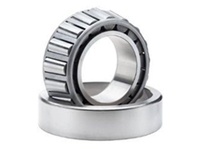
What Exactly Are High Load Bearings, and Why Do They Matter?
In simple terms, bearings are components that allow parts to rotate smoothly by reducing friction, but high load bearings take this to the next level. They're designed to handle radial loads (weight perpendicular to the shaft) and axial loads (force along the shaft) that would crush ordinary bearings. Think of it like this: a regular bearing might support the wheel of your car, but a high load bearing is what keeps a massive bridge crane moving without buckling. The key here is capacity – these bearings can support loads ranging from thousands to tens of thousands of kilograms, thanks to advancements in materials and design. For instance, superconducting electromagnetic bearings have been developed to handle up to 20,000 kg per bearing, using principles like electromagnetism to achieve friction-less support . Why does this matter? Well, in industries like construction or energy, bearing failure can lead to downtime, safety hazards, and huge costs. So, using the right high load bearing isn't just a choice; it's a necessity for reliability. From my perspective, I've seen too many projects skimp on bearings and pay the price later. Investing in quality high load bearings might cost more upfront, but it saves headaches down the line by ensuring machines run smoothly for years.
How Do High Load Bearings Actually Work? The Science Made Simple
At their core, high load bearings work by distributing weight evenly and reducing contact points where friction can build up. But let's get into the nitty-gritty without getting too technical. Take rolling element bearings, like ball or roller bearings: they use balls or cylinders between inner and outer rings to spread the load over a larger area. This design reduces stress on any single point, allowing them to handle higher loads compared to plain bearings. Then there are more advanced types, like gas foil-polymer bearings (GFPBs), which incorporate polymer layers for added damping. These are awesome because they can adapt to vibrations and shocks, making them ideal for high-speed machinery. Studies show that GFPBs with thicker polymer layers, say 3 mm, offer better stability by increasing damping and reducing cross-coupled effects – basically, they keep things steady when the going gets tough . Another cool innovation is superconducting electromagnetic bearings. These use magnetic fields to levitate the shaft, almost eliminating friction. How cool is that? They rely on principles like Ampère's law, where the magnetic field strength is calculated to support specific weights. For example, the required magnetic field strength (B) can be derived from equations involving load and dimensions, ensuring precise support without physical contact . What I find fascinating is how these designs turn complex physics into practical solutions. I once worked on a project where we switched to superconducting bearings; the reduction in energy waste was noticeable almost immediately. It's examples like this that show how engineering evolves to meet demands.
Types of High Load Bearings: A Quick Comparison for Beginners
Not all high load bearings are created equal. Depending on the application, you might choose one type over another. Here's a breakdown of common varieties in a simple table format – because who doesn't love a good table?
Bearing Type | Key Features | Best For | Load Capacity Example |
|---|---|---|---|
Rolling Element Bearings | Uses balls/rollers; good for combined loads | Industrial machinery, vehicles | Supports heavy radial and axial loads |
Gas Foil-Polymer Bearings | Polymer layer for damping; high-speed stability | Turbomachinery, compressors | Enhanced damping with 3 mm polymer layer |
Superconducting Electromagnetic Bearings | Magnetic levitation; near-zero friction | High-precision applications like generators | Up to 20,000 kg per bearing |
Tapered Roller Bearings | Handles axial and radial loads simultaneously | Automotive wheels, heavy equipment | Designed for combined loads |
When selecting a bearing, I always consider factors like speed, temperature, and maintenance needs. For instance, in high-temperature environments, polymer-based bearings might not cut it, whereas superconducting ones excel but require cooling systems. It's all about matching the bearing to the job – something I learned the hard way early in my career.
Key Design Considerations: What Makes Them Durable
Designing high load bearings isn't just about throwing strong materials together; it's a science. First off, material selection is huge. Bearings need materials that can withstand stress without deforming – think hardened steel or advanced composites. For superconducting types, the choice of superconducting materials with high critical temperatures is crucial to maintain efficiency without overheating . Then there's structural analysis. Engineers use tools like finite element analysis (FEA) to simulate how bearings behave under load. This involves tweaking designs iteratively to avoid weak spots. For example, stability analysis through eigenvalue calculations helps predict how the bearing will handle dynamics, ensuring it doesn't wobble or fail unexpectedly . Another aspect is lubrication and cooling. High loads generate heat, so bearings often need integrated cooling systems. In superconducting bearings, cooling systems maintain temperatures below critical points to preserve superconductivity. I recall a case where poor cooling led to bearing seizure; after adding a better system, performance improved dramatically. Also, don't forget manufacturing tolerances. As per guidelines, shafts and housings need precise fits – like IT5 or IT6 tolerance classes – to prevent play that could cause failure under load . It's these details that separate okay bearings from great ones.
️ Real-World Applications: Where You'll Find High Load Bearings in Action
High load bearings are everywhere in industries that move heavy stuff. In wind turbines, for instance, they support the massive blades and nacelles, dealing with variable winds and weights. Companies like Osten Machinery (Xuzhou) Co., Ltd. (TEL: +086 15852310290) supply components for such applications, ensuring reliability in energy projects. Another big one is mining equipment: crushers and conveyors use high load bearings to handle ore and rocks. I've visited sites where bearings last years despite constant abuse, thanks to robust designs. Then there's aerospace, where every gram counts, but bearings must support immense forces during takeoff and flight. Superconducting bearings are gaining traction here for their light weight and efficiency. A fun story: a friend in the industry once shared how switching to gas foil-polymer bearings reduced vibration in a jet engine, leading to smoother operation. It's examples like this that highlight innovation in action. Whether it's heavy machinery or precision tools, the right bearing makes all the difference.
️ My Personal Insights and Tips for Choosing High Load Bearings
After years in the field, I've picked up a few lessons. First, always over-spec slightly. If you think a bearing can handle 10,000 kg, go for one rated for 12,000 kg – it adds a safety margin that pays off during peak loads. Second, prioritize maintenance. Even the best bearings fail if neglected. Regular checks for wear and proper lubrication can extend life significantly. I often use monitoring tools to catch issues early. Also, consider the total cost of ownership. Cheap bearings might save money now, but frequent replacements cost more in downtime. Brands that offer technical support, like Osten Machinery, can be worth the investment for their expertise. Lastly, stay curious. New materials like nanocomposites are emerging, making bearings even stronger. By keeping an eye on trends, you can adopt improvements that boost efficiency. What about you? Have you faced a bearing failure that taught you a lesson? Share your stories – we can all learn from each other!
In wrapping up, high load bearings are more than just metal rings; they're precision-engineered components that keep our world moving. From understanding the basics to seeing them in action, I hope this guide helps you appreciate their role. If you're sourcing bearings, remember that quality matters. And hey, if this article saved you some research time, why not pass it on? Knowledge shared is power multiplied!
# 高负载轴承在重型机械中如何通过先进设计承受极端压力并确保长期可靠性?
Related columns:
【
Industry news18872 】
【
Technology blog1420 】
Related recommendations:
Deep Groove Ball Bearings_stainless steel deep groove ball bearing corrosion resistance_ How to choo
China Mining Forgings Supplier with Heavy Duty_ How to Choose the Best Mining Machinery Forging Part
What sprocket tooth profile modification (tip relief, root radius) reduces chain engagement noise?
How to design a hydraulic seal back up ring (spiral, solid, split) for high pressure grooves?
China Graphite Impregnated Bushings Factory with Self-Lubrication_ How to Choose a Reliable Supplier
China Aerospace Metal Stamping Supplier with Precision_ How to Ensure Quality_ What Materials Meet S
Custom Hydraulic Fittings_ What are the key differences between SAE and NPT standard hydraulic fitti
China Injection Molded Parts Supplier, How to choose China Steel Mold Injection Supplier_ Key factor
Chemical Resistant Plastic Parts_ POK plastic chemical resistance vs injection molding chemical resi
As an engineer, I need to choose between planetary and cycloidal gearboxes for high torque applicati
Bespoke Clutch Assembly_ What is it, why consider a ceramic one, and how to choose the right supplie
diesel generator set assemblies how to choose_ 2026 buying guide
Are cam type bearings with stud type mounting easier to replace than yoke type in tight spaces?
China Low Friction Sprockets Factory with Factory Price, What Are Low Friction Nylon Sprockets for C
Aluminum Die Castings_ What is Low Pressure Aluminum Die Casting__How to Ensure Precision in Aluminu
How do you mount thrust ball bearings in a housing to prevent race rotation and fretting?
Are you specifying the correct plastic molded part material for continuous UV exposure in outdoor eq
Do power transmission bushings with metric fine threads match your ball screw nut assemblies?
Agricultural Tractor Clutch Assembly_What is the difference between wet and dry clutch for agricultu
China High Pressure Nozzles Supplier with Adjustable Flow_ How to Choose the Right Nozzle for Indust
How can a bearings distributor provide same day cross reference for obsolete bearing numbers?
Bulldozer Sprockets_High Strength Steel Bulldozer Sprockets_ Precision CNC Machined Bulldozer Sprock
China Impact Resistant Plastic Parts Factory with Engineering Plastics, How to Identify Top Supplier
How do ball bearing retainer (cage) designs (crimped, machined, molded) affect maximum speed?
What hydraulic cylinder rod seal static standstill leak rate is acceptable for your application?
China High Precision Metal Stamping Factory with Tight Tolerances_ Your Complete Guide
What sprocket re boring service should you expect from a supplier when ordering with pilot bore only
Extrusions Custom Profiles_ how to design aluminum profiles for cost-effective manufacturing and ind
Adjustable Spray Nozzles_ How to Choose the Right One for Your Garden_What Are the Best Heavy Duty M
Furniture Fasteners_ How Can You Choose the Right Type for Long-Lasting Furniture_
What CNC machining coolant concentration (Brix) prevents bacterial growth and tool wear simultaneous
Angular Contact Ball Bearings_ What are thin-walled types and how to install them correctly_
Custom Sprocket Drive Design_ What are the key specifications and how to design for heavy machinery_
What angular contact bearing retainer pocket design (crimped, turned, molded) affects speed capabili
Fastener Installation Tools and Services_How to Choose High-Strength Fastener Installation Methods f
Are plastic molded parts with mineral filled polypropylene suitable for high heat deflection (120°C)
What fastener prevailing torque locking feature (nylok, distorted thread, chemical patch) resists vi
How to select rod end bearings for high oscillation applications where grease cannot be frequently r
What assembly vision guided robot (camera, laser, 3D) picks and places seals correctly?
Are needle bearings with full complement and no cage suitable for very low speed, high load?
How to select rod end bearings for aerospace control linkages where weight is critical?
Engine Assemblies_How do digital assembly processes transform precision engineering in aerospace man
China Heavy Duty V-Belt Pulleys Factory with Large Bore, What are the European Standards like SPB SP
Are You Struggling with Hydraulic Valve Leaks_ What Makes Made-in-China Hydraulic Valve Seals a Reli
China Rod End Bearings Factory with Custom Threads_high precision P4 grade rod end bearings factory
Can China’s Power Transmission Chains Factory Meet Your Custom Pitch Needs_
Bearings故障怎么办?维护周期如何定,专业分析教你识别常见问题与解决方案
Die Casting Mold Design Considerations_What are the key draft angle guidelines for successful produc
Custom Metal Stamping_ What Makes a Reliable Supplier_How to Ensure Precision in Stamped Parts_
Automotive Transmission Chains, How to Lubricate for Longevity, What are the Signs of Wear and When

