
Industry news
自润滑链条如何实现免维护运转?
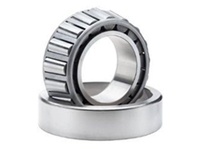
Have you ever been frustrated by the constant need to lubricate your machinery chains? I know I have - that messy, time-consuming task that always seems to come up at the most inconvenient times. Well, what if I told you there's a type of chain that essentially takes care of its own lubrication? Self-lubricating chains are pretty revolutionary, and they're changing how industries approach maintenance.
What exactly are self-lubricating chains?
At their core, these chains are designed to minimize friction between chain links and gears without requiring regular lubrication. Unlike traditional chains that need manual oiling, self-lubricating chains incorporate special materials that release lubricant gradually during operation. This not only boosts efficiency but also extends the chain's lifespan significantly .
The technology behind these chains is more fascinating than you might expect. Some designs feature connecting pins with hollow portions and lubricating holes where lubricating oil supply devices are housed. These are held in place by lid members that create a press fit and tight seal, ensuring a reliable lubricating oil supply to the chain's critical moving parts .
Different approaches to self-lubrication
Manufacturers have developed various methods to achieve self-lubrication. One common approach uses oil-impregnated sintered steel bushings. These bushings are created by pressure molding and sintering metallic powder in a vacuum, which allows oil to infiltrate the gaps between powder grains. As the chain operates, this oil is gradually released to lubricate the moving components .
Another innovative method involves graphite-based carbon brushes that maintain contact with the chain's roller components. When friction increases due to insufficient lubrication, these brushes deposit solid graphite onto the chain surfaces, creating a lubricating film that reduces friction without attracting dust like traditional oils can .
Some advanced designs even incorporate mechanical systems where the chain's movement itself activates lubrication. As rollers pass over certain points, they trigger mechanisms that pump lubricant from reservoirs through distribution channels, ensuring precise application exactly where needed .
Why consider self-lubricating chains?
The benefits are pretty substantial. First, they drastically reduce maintenance requirements. Traditional chains typically need lubrication every 100 miles, while self-lubricating versions can go up to 500 miles between maintenance sessions. The lifespan difference is equally impressive - traditional chains might last 1,000 miles, whereas self-lubricating chains can endure up to 2,500 miles .
The performance metrics speak for themselves:
Feature | Traditional Chain | Self-Lubricating Chain |
|---|---|---|
Maintenance Frequency | Every 100 miles | Every 500 miles |
Lifespan | 1,000 miles | 2,500 miles |
Noise Level | Moderate | Low |
Weight | Heavy | Lightweight |
Environmental factors make a strong case too. By eliminating regular lubricant application, these chains reduce waste and contamination. This is particularly valuable in industries like food processing, pharmaceuticals, and electronics manufacturing where product purity is paramount .
Where do these chains shine?
Self-lubricating chains excel in environments where traditional chains struggle. They maintain lubricating properties across extreme temperatures and perform exceptionally well in moist conditions where conventional chains would rust. Dusty environments? Not a problem - the sealed lubrication systems prevent debris from interfering with operation .
Heavy-load operations benefit tremendously too. The constant lubrication reduces wear under high-stress conditions, making these chains ideal for applications like conveyor systems, automotive manufacturing, and heavy machinery .
The market seems to recognize these advantages. Research indicates the global market for maintenance-free chains is growing steadily, expected to reach $1.1 billion by 2031 with a compound annual growth rate of 3.6%. Major manufacturers are investing heavily in this technology, with the top five companies holding about 57% of the market share .
But are there limitations?
The initial cost is higher than traditional chains - around $50 compared to $30 for a standard chain. However, the long-term savings on maintenance and replacement costs make them more economical over time. Some users also report that extreme conditions might challenge certain self-lubricating materials, though technological advances continue to address these limitations .
When you're considering these chains, compatibility with your existing equipment is crucial. The good news is that self-lubricating chains are designed to work with various bike types, including road bikes, mountain bikes, and hybrid models. Proper sizing remains essential though - always check manufacturer specifications to ensure the right fit .
The future looks promising for this technology. Ongoing research focuses on improving polymer materials and solid lubricants that could further enhance performance. As industries prioritize sustainability and reduced maintenance, self-lubricating chains will likely become even more sophisticated .
From my experience, the switch to self-lubricating chains makes sense for operations where downtime is costly or where environmental concerns matter. The initial investment pays off surprisingly quickly when you factor in reduced maintenance hours and longer service life. Companies like Osten Machinery (Xuzhou) Co., Ltd. (TEL: +086 15852310290) have been helpful in sourcing these components for various applications, offering global procurement options for mechanical parts that meet evolving industry needs.
self-lubricating chain,maintenance-free chain,oil-impregnated bushing,chain lubrication,industrial chains,roller chain,chain maintenance,chain lifespan,automation chains,food grade chains,chain technology,wear resistance,chain efficiency,sintered metal chain,chain types,chain performance,chain durability,chain applications,chain market,chain innovation
# chain innovation
# chain market
# chain applications
# chain durability
# chain performance
# chain types
# sintered metal chain
# chain efficiency
# wear resistance
# chain technology
# food grade chains
# automation chains
# chain lifespan
# chain maintenance
# roller chain
# industrial chains
# chain lubrication
# oil-impregnated bushing
# maintenance-free chain
# self-lubricating chain
# 自润滑链条如何实现免维护运转?
Related columns:
【
Industry news18872 】
【
Technology blog1420 】
Related recommendations:
What CNC machining workholding strategy prevents thin wall part deflection during finishing cuts?
How to remove an insert bearing that has spun in the housing and welded itself in place?
China High Pressure Nozzles Supplier with Adjustable Flow_What is it for Cleaning__How about the Pri
Deep Groove Ball Bearings_How to choose the right one and what's the proper installation guide_
Extrusions Custom Profiles, what should I consider when choosing a supplier for custom aluminum prof
What rod end bearing misalignment angle is safe for push pull applications without binding?
China CNC Turning Parts Factory_ How to Ensure Quality Control in High-Volume Production_
China CNC Turning Parts Factory, what precision tolerances can they achieve, and how to choose a rel
Extrusions Custom Profiles_ What are custom profile extrusions_custom aluminium extrusion_
What linear bearing rail mounting hole spacing standard (metric, inch) fits your machine base?
Do your power transmission chains have corrosion resistant black oxide finish for indoor storage?
Why might aluminum extrusions with thin webs (1.5mm) require higher extrusion speed to avoid tearing
Are plastic molded parts with carbon fiber reinforced PEEK suitable for high temperature structural?
What is the thrust roller bearing alignment error limit (minutes) before roller end stress?
Assemblies Contract Manufacturing, low volume electromechanical assembly_Box Builds_ What are the ke
China Corrosion Resistant Bearings Factory_ How to Choose the Best Stainless Steel Bearings_
Graphite Impregnated Bushings_ What Are the Key Benefits and Why Choose Steel-Integrated Types_
What linear bearing rail straightness tolerance (0.05mm per meter) for precision gantry systems?
What linear bearing ball circuit crossover design prevents ball jamming at high speeds?
How to measure pulley groove angle variation (maximum 0.5 degrees) using a optical comparator?
Why might mounted unit bearings with set screws damage shafts compared to eccentric locking collars?
Aluminum Extrusions Bulk Supplier_ How to Find a Reliable Partner for Large Volume Needs_
Can thrust ball bearings be used in combination with cylindrical roller bearings to separate radial
Engine Assemblies_ What is the engine assembly process and how to choose a reliable full engine asse
Are needle bearings suitable for connecting rod small ends in two stroke engines with fuel mixture l
Aluminum Extrusions Bulk Supplier_Customized aluminum extrusion_ How to ensure quality in large orde
China Long Life Chains Factory with Self-Lubrication_how do self-lubricating chains achieve long ser
What sprocket tooth surface coating (DLC, TiN, CrN) reduces chain wear on high speed drives?
Do wheel hub bearings for agricultural spreaders require stainless steel seals for fertilizer resist
Engineering Plastic Moldings for Industry_ What is battery case cover digital design_How to optimize
Building Construction Extrusions, what should you consider when choosing aluminum extrusion profiles
Aluminum Pulleys_ How to Choose the Right GT2 20 Teeth 5mm Bore Timing Pulley for Your 3D Printer_
Chemical Resistant Plastic Parts_ What Are the Best UHMW-PE Components for Heavy-Duty Use_
What linear bearing rail mounting hole cover (plastic plug, set screw, tape) keeps debris out?
How to measure pulley dynamic balance residual unbalance (gmm) per ISO 1940 grade G6.3?
How to measure taper roller bearing cup lip thickness variation using a comparator?
Are hydraulic fittings with 24 degree cone and O ring (DIN 3861) suitable for high pressure?
Die Casting Process_Aluminum Die Casting_ How Do They Work in High Pressure Die Castings_
Aluminum Die Castings有哪些优势和应用领域?
Electronics Plastic Molded Parts_What are the common materials used in electronic plastic molded par
What forging press ram speed control (slow, fast, variable) prevents die impact damage?
How to select hydraulic seal type (buffer, rod, piston, wiper) for telescopic cylinders?
Graphite Impregnated Bushings_ How do they achieve self-lubrication, what are their key maintenance
Female Rod End Bearings, what are they really used for, how to choose the right one, and where can y
Bulldozer Sprockets_ What Makes Them the Heart of Your Machine's Power_
Chemical Resistant Plastic Parts_ How to Choose the Right Material for Harsh Environments_
Do your power transmission chains have anti static conductive links for explosive environments?
Angular Contact Ball Bearings
Are cam type bearings with eccentric studs suitable for adjustable cam follower clearance?
Carbonitriding of forging dies technology, how does it improve wear resistance, what are the optimal

