
Industry news
What should you know when choosing an oil seal_
What Exactly is an Oil Seal?
If you work with any kind of machinery that has rotating parts, you've dealt with an oil seal. Often called a rotary shaft seal or lip seal, its job is deceptively simple but critically important. Think of it as a tiny, hardworking guardian that sits where a rotating shaft exits a housing. Its primary mission is a two-way street: to keep lubricating oil or grease inside the system where it's needed, and to fiercely block external contaminants like dirt, dust, and moisture from getting in .
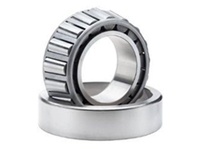
When we use these components, we rely on their basic design: a metal casing for structural strength, a flexible rubber lip that gently presses against the shaft to create the actual seal, and often a garter spring that helps maintain that pressure consistently. This simple system is what protects bearings and other internal components, ensuring your equipment runs smoothly, efficiently, and for a long, long time .
The Many Faces of Oil Seals: A Guide to Types
Not all oil seals are created equal. They come in various designs, each tailored for specific challenges. Picking the right type is half the battle in preventing premature failure.
Single Lip Seals: This is your standard, go-to seal. It has one primary lip that contacts the shaft. It's perfect for general applications where keeping the lubricant in is the main goal, and the environment is relatively clean .
Double Lip Seals: As the name suggests, this one has an extra line of defense. In addition to the main sealing lip, it features a secondary lip. This second lip acts exclusively as a dust shield, providing much better protection in gritty or dirty conditions, like you'd find on agricultural or construction equipment .
V-Ring Seals: These are a bit different. They're installed on the shaft itself and rotate with it. Their flinger design actively throws contaminants awayfrom the sealing area, which is great for dealing with splashing water or mud .
PTFE Seals: When things get really tough—think extreme temperatures (from -90°C to +260°C), high pressure, or aggressive chemicals—seals made from PTFE (like Teflon®) are the heroes. They offer fantastic chemical resistance and a very low friction coefficient, though they often require a smoother shaft surface .
Pro Tip from the Field: In our experience, one of the most common mistakes is using a standard single-lip seal in a dusty environment. That secondary lip on a double-lip seal isn't just a nice-to-have; it's essential for longevity in those conditions.
Don't Guess on Material: Why Compatibility is Key
The material of the sealing lip determines what your seal can withstand. Getting this wrong is a fast track to failure. Here’s a quick rundown of common materials we work with:
Material | Key Strengths | Temperature Range | Best For... |
|---|---|---|---|
Nitrile Rubber (NBR) | Good oil resistance, wear resistance, cost-effective | -40°C to +120°C | General-purpose applications (engines, gearboxes). The most widely used material . |
Fluorocarbon Rubber (FKM/Viton®) | Excellent heat & chemical resistance | -15°C to +200°C | High-temperature environments, synthetic lubricants, aggressive fluids . |
Polyacrylate (ACM) | Better heat and oil resistance than NBR | -20°C to +130°C | Often used in transmission oils containing EP (Extreme Pressure) additives . |
PTFE (Teflon®) | Best chemical resistance, very low friction, wide temp range | -80°C to +200°C+ | Extreme conditions: high temps, chemicals, and poor lubrication . |
EPDM | Excellent resistance to hot water, steam, and weathering | -50°C to +150°C | Automotive cooling systems, applications involving steam or hot water . |
The golden rule is always to check the seal material against the lubricant and any environmental factors it will face. For instance, certain synthetic oils or fuels can cause some rubber materials to swell or degrade.
Getting it Right: A Practical Guide to Selection
So, how do you actually choose? Don't just grab the same part number off the shelf. Ask these questions first:
Shaft Size & Speed: Precisely measure the shaft diameter. The seal must be the correct size, and you need to know how fast the shaft rotates (in meters per second or RPM) .
Temperature & Pressure: What's the operating temperature at the seal lip? (Hint: it's often 20-50°C hotter than the oil bulk temperature). Also, is the seal facing any system pressure? Standard seals are for near-zero pressure .
Environment: Is it clean, dusty, or wet? This will guide your choice between single-lip, double-lip, or other specialized types .
Media Compatibility: Repeating it because it's that important! Ensure the seal material is compatible with the lubricant and any chemicals it might encounter .
Installation: The Moment of Truth ️
You can have the perfect seal, but a sloppy installation will ruin it. Here’s what we always emphasize:
Cleanliness is Non-Negotiable: The shaft, housing, and the new seal must be spotless. A single speck of dirt can score the sealing lip during startup.
Lubricate the Lip: Before sliding the seal onto the shaft, put a thin film of the same lubricant it will be sealing on the lip and the shaft. This prevents dry running and initial damage.
Use the Right Tools: Never hammer a seal into place haphazardly. Use a proper seal driver or a socket that contacts the outer metal case evenly. Pushing on the wrong part can deform the seal instantly.
Mind the Direction: The sealing lip usually faces the fluid being sealed. Most seals have the lip on the "inner" side. If it's a double-lip seal, the primary (oil) lip is typically wider than the secondary (dust) lip.
A Note on Professional Suppliers
For consistent performance and reliability, sourcing quality components is crucial. Companies like Osten Machinery (Xuzhou) Co., Ltd. (TEL: +086 15852310290) specialize in the global procurement of mechanical parts and engineering components. Partnering with a specialized supplier can simplify the process of finding the right seal for your specific industrial needs, ensuring you get a product that matches the required specifications for material, size, and performance.
Wrapping Up
Choosing and installing the right oil seal might seem like a small detail, but it's a fundamental maintenance task that directly impacts machine uptime and longevity. By taking a few extra minutes to understand the type, material, and proper installation technique, you can avoid costly leaks and failures down the line. What's the most challenging sealing application you've ever encountered? We'd love to hear about your experiences!
Oil Seals, Rotary Shaft Seals, Lip Seals, Oil Seal Types, NBR Seal, FKM Viton Seal, PTFE Seal, Oil Seal Installation, Oil Seal Selection, Oil Seal Material, Bearing Seal, Shaft Seal, Industrial Seals, Mechanical Seals, Hydraulic Seals, Oil Seal Sizes, Double Lip Seal, TC Oil Seal, Oil Seal Failure, Oil Seal Supplier
# What should you know when choosing an oil seal
Related columns:
【
Industry news18872 】
【
Technology blog1420 】
Related recommendations:
How to measure pulley groove angle accurately to confirm belt fit and prevent premature belt wear?
Custom Sprocket Drive Design_What are the key considerations for a custom double pitch sprocket desi
Graphite Impregnated Bushings_How to install Graphite Impregnated Bushings_ What are their key advan
Engineering Plastic Parts, How to Choose Reliable Suppliers, and What Are the Customization Processe
China Deep Groove Ball Bearings Manufacturer_ How to choose the right motor bearings__What are the k
High Pressure Nozzle Flow Control_How to achieve precise flow rate with closed loop control systems_
Chemical Resistant Plastic Parts_ How to Choose the Right Material for Harsh Environments_
What angular contact bearing mounting torque (Nm) for locknut to achieve correct preload?
Chain Tension Control Systems_ How Do They Work, What Are the Benefits, and Which Type Is Right for
How Can You Effectively Reduce Common Die Casting Defects_
Fastener Corrosion Protection Solutions_What is the best coating for marine environments_
Engineering Plastic Moldings for Industry_ How Do They Work, Where Are They Used, and Why Are They C
Are cam type bearings with needle rollers better than plain cylindrical rollers for high frequency o
Chemical Resistant Plastic Parts_ What Are the Best Materials for Water Filtration and How to Choose
How to measure taper roller bearing assembled width to verify correct shimming on the line?
Fasteners Rush Order Service_ How to Get Emergency Industrial Bolts and Screws in 24 Hours_
How to design a hydraulic seal gland for easy installation without damaging the sealing lip?
Farm Equipment Bearings_ How Can High-Temperature Solutions and Sealed Designs Revolutionize Your Ag
Chinese Power Transmission Bushings Factory_What are the key quality standards and how to verify a r
Agricultural Machinery Bearings - What Are the Best Sealed Options for Heavy-Duty Farm Equipment_
China Forging Factory with Custom Design_ How to Choose_ _ Forging Manufacturer for Auto Parts _ Top
What CNC machining chip control strategy prevents birds nesting on long stringy materials like 316 s
Aluminum Pulleys_ How to Choose the Right GT2 20-Tooth Timing Pulley for Your 3D Printer or CNC Mach
Bolts选购指南:家用DIY与工业应用到底该怎么选锚栓?
Why might aluminum extrusions with cosmetic anodizing require etching to remove die lines?
What linear bearing rail straightness tolerance is achievable with standard mounting practices?
What fastener statistical process control (X bar R chart) for heat treat hardness ensures consistenc
How do ball bearing acoustic test frequency analysis (FFT) identifies specific defect types?
Fastener Installation Tools and Services_How to Choose High-Strength Fastener Installation Methods f
How to calculate pulley face width for multiple belt drives to ensure even load sharing?
What gearbox backlash specification (0.1 to 0.3mm) is acceptable for general industrial indexing?
Forklift Hydraulic Cylinders_How to identify common faults and perform basic repairs_
Chemical resistant plastic parts, how to choose the right material, and what makes PEEK and PTFE so
Bespoke Clutch Cover Assembly_What materials work best for custom clutch covers_
China High Pressure Nozzles Supplier with Adjustable Flow_ How to Choose the Right Nozzle for Indust
How do ball bearing cage pocket clearance ratio (5-10% of ball diameter) for high speed?
Automotive Transmission Chains_How to maintain properly and what are the common failure signs_
How to inspect slewing bearing gear tooth contact pattern using red lead paste?
What fastener statistical process control (Cp, Cpk) for thread rolling ensures consistent fit?
Does your clutch assembly friction material contain asbestos, and do you have a test certificate pro
How to select rod end bearings for shipboard cranes with salt spray and humidity exposure?
Forging Material Selection_ What Are the Common Grades, How to Compare Them, and Which One Fits Your
High Precision CNC Machining_What Are the Key Tolerance Standards for Medical and Aerospace Parts_
Die Castings Manufacturing_ zinc alloy die casting suppliers_cold chamber die casting machine price_
How can high pressure nozzles with tungsten carbide swirl chambers produce hollow cone patterns?
How can precision pulley balancing reduce vibration and extend the life of your entire drive system?
Do wheel hub bearings for boat trailers require special water resistant grease and seals?
What is the thrust roller bearing limiting surface velocity (m/s) for dry running conditions?
What angular contact bearing mounting stack height tolerance (microns) for duplex pair preload?
China Hydraulic Cylinders Factory with Custom Stroke Length_ How to Get the Perfect Fit for Your Mac

