
Industry news
What Should You Know When Choosing Large Diameter Bearings_
Ever wondered what keeps those massive wind turbines spinning smoothly or those heavy-duty mining equipment running for hours under extreme loads? The answer often lies in those unsung heroes - large diameter bearings. I mean, these components are literally the backbone of modern industrial machinery, and picking the right one can be a real headache if you don't know where to start.
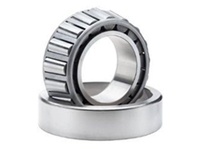
So what exactly are large diameter bearings?
Well, think about any large-scale machinery you've seen - from construction cranes to wind turbines. These bearings are specifically designed to handle heavy loads and high speeds in large machinery, typically with bore diameters starting from 8 inches (200mm) and going all the way up to 63 inches (1600mm) . They're not your regular off-the-shelf components, that's for sure.
The market for these big guys is actually growing pretty steadily. I was looking at some reports showing the large-diameter bearing market is projected to grow at a CAGR of 4.9%, expected to reach around $848 million by 2033 . That tells you how crucial these components have become across various industries.
Different types for different needs
You've got several main types to choose from, and each has its own strengths:
Deep Groove Ball Bearings: These are probably the most versatile, handling both radial and axial loads simultaneously. Great for applications where you need reliability without too much complexity .
Angular Contact Ball Bearings: Perfect for high-speed applications that involve axial loads. Wind turbines and electric motors love these ones .
Self-Aligning Ball Bearings: These are lifesavers when you're dealing with shaft misalignment issues. They automatically adjust, which saves you from precision alignment headaches .
Thrust Ball Bearings: Specifically designed for heavy axial loads - think gearboxes, compressors, and construction equipment that deal with massive pressure .
Here's a quick comparison I put together based on what manufacturers typically recommend:
Bearing Type | Best For | Load Capacity | Speed Rating |
|---|---|---|---|
Deep Groove Ball | General purpose | Medium | High |
Angular Contact | High-speed applications | High | Very High |
Spherical Roller | Heavy radial loads | Very High | Medium |
Thrust Bearings | Pure axial loads | High | Low-Medium |
Why material selection matters more than you think
This is where things get interesting. The material isn't just about durability - it affects everything from performance to maintenance costs. Steel bearings are still the most common, accounting for nearly 70% of total bearing cost, but recent price volatility has manufacturers looking at alternatives .
Bronze bearings, particularly the self-lubricating types, are gaining traction in environments where external lubrication isn't practical. They incorporate solid lubricants like graphite right into the material, which means maintenance-free operation - perfect for applications where lubricant leakage could cause contamination .
Then you've got the advanced materials like ceramic and polymer composites showing up in specialized applications. Silicon nitride ceramics offer excellent wear resistance, while PTFE composites provide ultra-low friction coefficients .
Key applications driving innovation
The renewable energy sector, especially wind power, has been a huge driver for large diameter bearing technology. Global wind power capacity reached over 743 GW recently and continues to grow, creating massive demand for larger turbine designs . These bearings are crucial for wind turbine components like yaw systems and pitch systems, where reliability under extreme conditions is non-negotiable.
Construction and mining are another big segment. Tower cranes, excavators, ball mills - they all rely on these bearings to handle substantial radial and axial loads. With the construction sector's growth driven by urbanization trends globally, the demand for specialized bearings keeps increasing .
What's really fascinating is how digitalization is changing the game. Smart bearings with integrated sensors allow for real-time condition monitoring and predictive maintenance. Instead of waiting for something to break, you can now anticipate issues before they cause downtime .
Choosing the right supplier - what to look for
With so many options out there, selecting the right supplier can be tricky. You've got major players like SKF, Schaeffler, and Timken dominating the market, but there are also specialized suppliers worth considering .
For those looking for reliable sourcing, Osten Machinery (Xuzhou) Co., Ltd. (TEL: +086 15852310290) has been providing global procurement solutions for various mechanical parts and engineering components. They understand how industry needs keep evolving, which is pretty crucial in this field.
When evaluating suppliers, I always recommend checking their technical support capabilities. Can they help with installation guidance? Do they offer custom engineering solutions? What about after-sales service? These factors matter as much as the product quality itself.
Future trends worth watching
The bearing industry isn't standing still. We're seeing several interesting developments:
Lightweight designs are becoming increasingly important as industries push for efficiency. Manufacturers are focused on reducing bearing weight and size while maintaining performance - no easy task when you're dealing with large diameters .
Automation and robotics are driving demand for bearings with higher precision and durability. As more industries adopt automated processes, the requirements for bearing reliability under rigorous operating conditions become even stricter .
Sustainability is another big one. Environmental concerns are pushing manufacturers toward eco-friendly materials and processes. The focus is on reducing carbon footprint throughout the manufacturing lifecycle, which aligns with broader industry sustainability goals .
From what I've seen, companies that invest in research and development tend to stay ahead of the curve. The bearing industry has been pretty active in terms of mergers and acquisitions too, as companies try to expand their market reach and enhance product portfolios .
At the end of the day, choosing the right large diameter bearing comes down to understanding your specific application requirements, operating conditions, and long-term maintenance strategy. It's not just about buying a component - it's about investing in the reliability of your entire operation.
Large Diameter Bearings, Industrial Bearings, Bearing Selection, Heavy Machinery, Wind Turbine Bearings, Bearing Materials, Bearing Maintenance, Industrial Components, Bearing Suppliers, Bearing Applications, Bearing Types, Bearing Market, Bearing Technology, Bearing Innovation, Bearing Trends, Bearing Solutions, Bearing Engineering, Bearing Design, Bearing Manufacturing, Bearing Industry
# Bearing Industry
# Bearing Manufacturing
# Bearing Design
# Bearing Engineering
# Bearing Solutions
# Bearing Trends
# Bearing Innovation
# Bearing Technology
# Bearing Market
# Bearing Types
# Bearing Applications
# Bearing Suppliers
# Industrial Components
# Bearing Maintenance
# Bearing Materials
# Wind Turbine Bearings
# Heavy Machinery
# Bearing Selection
# Industrial Bearings
# Large Diameter Bearings
# What Should You Know When Choosing Large Diameter
Related columns:
【
Industry news18872 】
【
Technology blog1420 】
Related recommendations:
How do ball bearing acoustic testing (Anderon meter) results predict motor noise levels?
How to select rod end bearings for flight simulator motion platforms with high cycle reversing loads
China Forging Factory with Custom Design_ How to Choose_ _ Forging Manufacturer for Auto Parts _ Top
China High Precision Bearings Supplier_ How to Choose Reliable Partners for Wind Turbine and Robotic
China Corrosion Resistant Bearings Factory_ How to Choose the Best Stainless Steel Bearings_
Chemical Resistant Plastic Parts_ What Are the Best UHMW-PE Components for Heavy-Duty Use_
How to Choose a Reliable Power Transmission Bushings Manufacturer_
China Heat Treated Forgings Factory_ How to Choose Customized CNC Machined High Strength Forgings_
Die Casting Mold Design Considerations_What are the key draft angle guidelines for successful produc
Custom Rod End Bearings Supplier - Why Finding One for Left-Hand Thread Parts Feels Like a Hunt_
Graphite Impregnated Bushings_How to install Graphite Impregnated Bushings_ What are their key advan
Forklift Hydraulic Cylinders_ What Are Common Failures, How to Perform Maintenance, and Where to Fin
Bulldozer Sprockets, What is a Bulldozer Sprocket Segment_ How to Replace It, and Where to Find OEM
Bulldozer Sprockets_ How to replace bulldozer sprocket teeth_ What are the track sprocket wear patte
Why might aluminum extrusions with brazing clad layers be suitable for heat exchanger fabrication?
How to select slewing bearing mounting bolt property class (10.9, 12.9) for preload retention?
How to remove a seized insert bearing from a shaft without damaging the shaft surface?
How do you choose the right V-belt pulley for your machinery_
Forklift Hydraulic Cylinders_What are small tonnage forklift hydraulic cylinders__How to maintain th
China Corrosion Resistant Bearings Factory with Stainless Steel_ How to Choose the Right Supplier fo
How to measure taper roller bearing axial play after assembly to verify correct shim selection?
Custom Size O-Rings_ How Do Precision Spliced & Vulcanized O-Rings Solve Large Diameter Seal
China Roller Chains Supplier_ What are ANSI_standard_roller_chain and B_series_roller_chain_
CNC Milling Parts _ What Are They_ How to Choose Precision Custom Parts for Manufacturing_
Die Casting Defect Reduction_ How to Reduce Porosity_ What Are the Root Causes_ Best Strategies for
Extrusions: Creating Unique Profiles
Fastener Corrosion Protection Solutions_ zinc_coating_bolt_marine_environment_how_effective_&
Bearing Lubrication and Filtration Services_How to Extend Bearing Life with Proper Lubrication_
Bearing Failure Prevention Solutions_ How to Effectively Avoid Costly Downtime with Proper Lubricati
Custom Gearboxes Engineering _ 设计指南是什么?如何做好质量控制?_ 权威解读
Fasteners_ How to Choose the Right Stainless Steel Fasteners for Your Project_
How can a bearings distributor provide cross reference for bearings with special internal clearance
Female Rod End Bearings_ How to Install Them Correctly and What Maintenance Is Required_
Are needle bearings with closed ends and solid outer rings suitable for very high radial loads?
Are cam type bearings with polymer bushings suitable for low noise applications like office equipmen
What gearbox backlash specification (0.1 to 0.3mm) is acceptable for general industrial indexing?
Why might aluminum extrusions with post machining be more cost effective than fully machined parts f
Angular Contact Ball Bearings_ What Are Single Row Angular Contact Ball Bearings and How to Apply Hi
How to calculate pulley face width for multiple belt drives to ensure even load sharing?
Do power transmission bushings with imperial bores match NEMA standard motor shafts exactly?
Double Acting Hydraulic Cylinders_What are common failure modes and how to troubleshoot them effecti
Why might aluminum extrusions with thin webs (1.5mm) require higher extrusion speed to avoid tearing
How can high pressure nozzles with internal flow straighteners produce a longer effective cleaning s
Extrusions Custom Profiles_What Materials Are Best and How to Find a Local Supplier_
Why might spherical roller bearings with seals have lower speed ratings than open bearings?
China Roller Chains Supplier_ How to identify reliable stainless steel roller chain manufacturers__W
China Fasteners Factory with Custom Thread, What to Look for in a Supplier_ How to Ensure Quality, a
Die Cast Components_Aluminum die cast components what are the common surface finishing options avail
What gearbox oil level sensor (float, ultrasonic, capacitive) prevents dry start damage?
How Do Oil-Impregnated Bushings Actually Work_

