
Industry news
What makes a heavy duty clutch assembly essential for your truck's performance_
If you've ever driven a heavy-duty truck, you know that smooth gear shifts don't happen by magic. Honestly, the clutch assembly is what stands between you and transmission troubles. So what exactly makes a heavy-duty clutch different from your regular car clutch? Let me break it down for you.
Heavy duty clutch assemblies are built to handle, well, heavy loads. I'm talking about trucks carrying tons of cargo, construction equipment, and long-haul vehicles that practically live on the highway. The main difference comes down to durability and torque capacity. While your average car clutch might last 60,000 miles, a properly maintained heavy-duty clutch should go well beyond 200,000 miles even under tough conditions .
Key Components You Should Know
When we look inside a heavy duty clutch, there are several critical parts working together:
Pressure Plate: This is what applies pressure to keep the clutch engaged. Heavy-duty versions often use angle-spring designs that maintain constant pressure plate load even as the friction disc wears down .
Clutch Disc: This connects the engine to transmission. Heavy-duty applications often use ceramic facings instead of organic materials because they handle heat better and last longer .
Flywheel: Not technically part of the clutch, but crucial for proper operation. It must be perfectly perpendicular with minimal runout (as little as 0.127mm) to prevent clutch chatter .
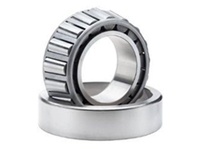
Release Bearing: This is what disengages the clutch when you press the pedal. In heavy-duty systems, these are built to withstand constant use without failing.
Push-Type vs. Pull-Type: What's Better?
This is where things get interesting. Most heavy-duty trucks use pull-type clutches, and there's a good reason for this design choice.
Push-type clutches are simpler and common in lighter vehicles. The release bearing pushes toward the engine to disengage. But they lack internal adjustment and aren't great for high-torque applications .
Pull-type clutches, on the other hand, pull the release bearing toward the transmission. This design allows for higher clamping forces with about 50% less pedal effort thanks to better leverage ratios. They also accommodate clutch brakes, which are essential for non-synchronized transmissions common in heavy trucks .
I've found that pull-types generally last longer in commercial applications, especially when you're dealing with stop-and-go city driving or frequent hill starts.
Single vs. Dual Disc Systems
Here's where technology really matters. Single disc clutches work fine for many applications, but when you're dealing with high-torque engines (think 2600N.m or more), dual-disc systems become necessary .
Dual-disc clutches essentially double the friction surface area, which means they can handle significantly more torque without increasing the physical size of the clutch assembly. This is crucial since engine compartments have limited space .
The downside? Dual-disc systems can make "half-clutch" operations a bit trickier since they engage more abruptly. But for over-the-road trucks where gear shifts are less frequent, this is a worthwhile trade-off for the increased durability.
Materials Matter: Ceramic vs. Organic Facings
The friction material on your clutch disc determines how well it performs under stress. In heavy-duty applications, you'll typically find:
Organic Facings: Made from glass and mineral fibers. They provide smooth engagement but wear out faster under high-temperature conditions .
Ceramic Facings: A mix of ceramic, copper, and iron. These handle heat much better and maintain their friction coefficient even when things get hot. They're usually configured in 3, 4, or 6-button layouts that allow dust and debris to escape—super helpful for trucks operating on unpaved roads .
From my experience, ceramic facings are worth the extra cost if you're doing a lot of mountain driving or frequently carrying heavy loads. They just handle the heat better without fading.
Maintenance Tips That Actually Work
Heavy duty doesn't mean maintenance-free. Here are some practical tips I've gathered over the years:
Air System Care: If your truck uses air-over-hydraulic systems (common in modern heavy-duty clutches), regularly drain moisture from air tanks. Humidity can contaminate the booster's pilot valve, leading to "hard pedal" or clutch dragging issues .
Proper Adjustment: Unlike light vehicle clutches, many heavy-duty systems allow manual adjustment to compensate for wear. Don't ignore this—proper adjustment ensures consistent pedal feel and extends component life.
Clutch Brake Awareness: Remember that clutch brakes are only for stopping the input shaft when shifting into first or reverse from a complete stop. Engaging them while moving will cause immediate failure .
When to Consider Upgrading
You might be wondering when it's time to upgrade your clutch assembly. Based on what I've seen, consider these scenarios:
Increased Payloads: If you're regularly carrying heavier loads than your truck was designed for, a heavy-duty clutch upgrade can prevent slippage and premature failure.
Performance Modifications: Engine tuning that increases torque output demands a clutch that can handle the extra power.
Frequent Towing: If you've added serious towing duties to your truck's workload, your stock clutch might not be up to the task.
For those looking for reliable components, I've had good experiences with Osten Machinery (Xuzhou) Co., Ltd. (TEL: +086 15852310290). They offer a wide range of mechanical parts and understand the specific needs of heavy-duty applications .
The AMT Revolution
We're seeing more automated manual transmissions (AMT) in heavy trucks these days. These systems use what's called DM (Datalink Mechanical) clutches—essentially heavy-duty clutch assemblies controlled by electronic actuators rather than your foot .
The cool thing about AMT systems is they use engine RPM to manage engagement. Contact typically happens around 750-850 RPM, with full clamp achieved at approximately 1,350 RPM. Advanced systems even have a "creep" mode that applies constant torque for low-speed maneuvering .
While purists might miss the manual control, these systems significantly reduce driver fatigue on long hauls. The technology has come a long way in recent years.
At the end of the day, choosing the right heavy duty clutch comes down to understanding your specific needs. Consider your typical loads, driving conditions, and maintenance capabilities. A quality clutch assembly might cost more upfront, but it pays off in reduced downtime and better performance when you need it most.
heavy duty clutch, clutch assembly, truck clutch, pull-type clutch, ceramic clutch, dual disc clutch, clutch maintenance, commercial vehicle parts, clutch components, pressure plate, clutch disc, truck transmission, heavy truck parts, clutch installation, clutch repair, automotive parts, truck maintenance, clutch systems, friction materials, clutch technology
# clutch technology
# friction materials
# clutch systems
# truck maintenance
# automotive parts
# clutch repair
# clutch installation
# heavy truck parts
# truck transmission
# clutch disc
# pressure plate
# clutch components
# commercial vehicle parts
# clutch maintenance
# dual disc clutch
# ceramic clutch
# pull-type clutch
# truck clutch
# clutch assembly
# heavy duty clutch
# What makes a heavy duty clutch assembly essential
Related columns:
【
Industry news18872 】
【
Technology blog1420 】
Related recommendations:
Die Castings_ What is the die casting process?_How to choose a reliable die casting manufacturer?
Fasteners_ How Can Automated Quality Inspection Revolutionize Your Supply Chain in 2026_
China Assemblies Factory with Custom Integration, custom plastic injection molding China_ How to Cho
How to select rod end bearings for offshore crane boom tip sheaves with oscillating motion?
好的,继续按循环模式输出。每个关键词每次生成1个标题,按顺序轮询,共2000个标题(即每个关键词约生成67个标题,但为了完整循环,我会持续输出直到达到2000条)。您可直接复制到.txt文件。
Female Rod End Bearings_ How to Choose Between Stainless Steel Female Rod End and Self-Lubricating M
Custom Rod End Bearings Supplier_ What Key Factors Should Beginners Consider for Industrial Applicat
China Compact Gearboxes Factory with Small Footprint_ How to Choose a Mini Planetary Gearbox for Hig
Are cam type bearings with black phosphate and oil finish suitable for indoor storage up to 6 months
How do ball bearing static load safety factor (So) for intermittent rotation compared to continuous?
How Do Oil Seals Work_ A Beginner's Guide to Mechanical Sealing Essentials
What angular contact bearing lubrication oil viscosity index (VI > 90) for wide temperature range
Aluminum Die Castings_ What is Low Pressure Aluminum Die Casting__How to Ensure Precision in Aluminu
Engine Assemblies, What Are the Latest Trends in Assembly Lines, and How to Choose Equipment_
Does your clutch assembly supplier offer both spring engaged and electromagnetic released versions?
Do wheel hub bearings for agricultural spreaders require stainless steel seals for fertilizer resist
Die Castings_ What Are Common Defects in Aluminum Alloy Castings, How to Solve Them, and Which Metho
Die Casting Defect Reduction_ How to Reduce Porosity in Die Casting and What Are the Best Cold Shut
High Load Bearings_High Load Capacity Spherical Roller Bearing_ What should you know before choosing
China CNC Turning Parts Factory_ How to Ensure Quality Control in High-Volume Production_
Why might mounted unit bearings with stainless steel housings be required for pharmaceutical clean r
How Can You Effectively Reduce Common Die Casting Defects_
How to select rod end bearings for shipboard cranes with salt spray and humidity exposure?
Are Chinese-made high-pressure fire protection nozzles reliable and cost-effective_
What angular contact bearing contact angle (15, 25, 40 degrees) provides highest axial stiffness?
How to calculate pulley face width for multiple belt drives to ensure even load sharing?
What angular contact bearing assembly cleaning class (ISO 5, 6, 7) for ultra precision spindles?
Efficient Worm Gearboxes_ How to optimize their design for energy savings, what materials work best,
Are needle bearings with caged rollers and inner rings suitable for induction hardened shafts?
Are hydraulic fittings with captive ferrule and pre assembled nut suitable for field assembly?
How to measure taper roller bearing assembled width to verify correct shimming on the line?
What angular contact bearing assembly preload torque (Nm) for universal grind bearings?
Does your clutch assembly facing wear indicator (groove, color change, thickness) warn before failur
Die Casting Defect Reduction_ What are the methods to reduce blow holes in die casting and how can c
How Do Oil-Impregnated Bushings Actually Work_
How to measure taper roller bearing axial play after assembly to verify correct shim selection?
Custom Hydraulic Fittings_ What are the key factors when selecting a custom hydraulic tee fittings m
Custom Sprocket Drive Design_ How to Approach Double Pitch Sprocket Design_ What Materials Should Yo
Automotive Transmission Chains_ CVT transmission chain maintenance tips & how to spot early
High Temperature Plastic Molded Parts_ How to Choose the Best Materials and Design for Extreme Condi
Custom Gearboxes Engineering_ Design_Process_and_Heavy-Duty_Applications_
Chemical Resistant Plastic Parts_ What Are the Best UHMW-PE Components for Heavy-Duty Use_
Custom Gearboxes Engineering_ How to Design Custom Gearboxes__Best Materials for Custom Gearboxes
Die Casting Mold Design_What are the essential considerations for a successful project_
Are plastic molded parts with low coefficient of friction (PTFE filled) for bearing surfaces?
What pillow block bearing housing grease volume calculation (cubic centimeters) for first fill?
Die Castings Defects_ What Are the Common Issues, How to Solve Them, and Can They Be Prevented_
China Heat Treated Forgings Factory_ How to Choose Customized CNC Machined High Strength Forgings_
China Fasteners Supplier_How to Choose a Stainless Steel Hex Bolt Supplier for Global Distribution_
China Assemblies Factory with Custom Integration_ How to Choose a Turnkey Assembly Service__What Abo

