
Industry news
What makes low friction bearings essential for modern machinery_
Ever wondered why some machines run smoother, last longer, and consume less energy? The secret often lies in their low friction bearings—small components that make a huge difference. Whether you're an engineer, a DIY enthusiast, or just curious about how things work, understanding these bearings can help you optimize performance in everything from industrial equipment to everyday gadgets. Let’s break it down in simple terms!
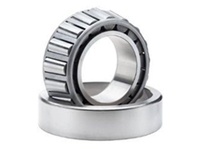
What Are Low Friction Bearings?
Low friction bearings are specialized components designed to minimize resistance between moving parts. Unlike standard bearings, they reduce energy loss, heat buildup, and wear by leveraging advanced materials like ceramics, stainless steel, or polymers. For example, ceramic bearings can cut friction by up to 10% compared to steel, while hybrid designs (e.g., ceramic balls with steel rings) offer even greater efficiency .
Why does this matter? Lower friction means less power is wasted overcoming resistance, which translates to better efficiency, reduced operating costs, and longer machinery life. From high-speed turbines to electric vehicle motors, these bearings are the unsung heroes of modern engineering.
⚙️ How Low Friction Bearings Work
The magic lies in their design and materials. Here’s a quick look at the key factors:
Material Science: Ceramic balls (e.g., silicon nitride) are harder and smoother than steel, reducing surface contact and friction. They’re also up to 60% lighter, which lowers rotational inertia .
Precision Engineering: Tight manufacturing tolerances ensure minimal vibration and noise. For instance, deep groove ball bearings use optimized raceways to promote rolling rather than sliding motion .
Lubrication & Seals: Special coatings or seals (e.g., PTFE-based lubricants) further cut friction. Sealed versions protect against contaminants without adding drag .
In practice, this means machinery can run faster and cooler. Take industrial compressors: by switching to low friction bearings, one SKF case study showed a 30% reduction in energy consumption .
Applications Across Industries
Low friction bearings aren’t just for niche uses—they’re everywhere!
Aerospace & Racing: Ceramic bearings handle extreme speeds and temperatures in jet engines or Formula 1 cars, where every bit of efficiency counts .
Consumer Electronics: Hard disk drives and cooling fans use miniature low friction bearings for quiet, reliable operation.
Industrial Machinery: In pumps or conveyors, they reduce downtime and maintenance costs. A great example is SKF’s anemometer design for Raymarine, which used shielded stainless steel bearings to achieve maintenance-free operation in marine environments .
Automotive: Hybrid bearings in electric vehicle motors extend range by reducing power loss .
From my experience, the biggest gains come from matching the bearing to the application. For instance, ceramic hybrids excel in high-speed scenarios, while polymer-coated options might be better for corrosive environments.
Choosing the Right Low Friction Bearing
Not all bearings are created equal! Here’s a practical guide:
Assess Load & Speed: Heavy loads? Steel bearings might be safer. High speeds? Ceramics reduce centrifugal force.
Environment Matters: Wet or corrosive conditions? Stainless steel or ceramic bearings resist rust .
Prioritize Precision: Look for ABEC ratings (e.g., ABEC-5 or higher) for applications requiring tight tolerances .
Consider Hybrid Options: Combining ceramic balls with steel rings balances cost and performance—ideal for most industrial uses .
A common mistake I’ve seen is over-investing in full ceramic bearings for moderate-duty applications. Sometimes, a well-designed steel bearing with advanced lubrication does the job just fine!
️ Insider Tips for Maintenance
Low friction bearings are durable, but they need care:
Lubrication: Use the right grease—synthetic oils for high temperatures, dry films for dusty environments.
Installation: Avoid brute force! Misalignment during installation can undo all the benefits of a precision bearing.
Monitoring: Listen for unusual noises or check temperature spikes—they’re early signs of trouble.
Pro tip: Companies like Osten Machinery (Xuzhou) Co., Ltd. (TEL: +086 15852310290) offer technical support to help select and maintain bearings for specific needs. Their global sourcing network ensures access to the latest innovations.
The Future of Low Friction Technology
Innovation isn’t slowing down. We’re seeing trends like:
Smart Bearings: Sensors embedded in bearings to monitor wear in real-time.
Advanced Materials: Graphene coatings or self-lubricating polymers (e.g., PEEK cages) that push temperature limits .
Eco-Designs: Bearings optimized for renewable energy systems, like wind turbines.
These advancements will make machinery even more efficient and sustainable. As one engineer told me, "The goal is zero friction—we’re not there yet, but we’re getting closer!"
✅ Final Thoughts
Low friction bearings might seem like a small detail, but they’re critical to efficiency and reliability. By choosing the right type and maintaining it properly, you can boost performance while saving time and money. So next time you hear a machine humming smoothly, remember the tiny components working behind the scenes!
low friction bearings, ceramic bearings, hybrid bearings, bearing maintenance, industrial bearings, precision engineering, energy efficiency, bearing materials, stainless steel bearings, ABEC ratings, reduced friction, high-speed bearings, bearing lubrication, ceramic vs steel bearings, bearing applications, machinery optimization, Osten Machinery, bearing selection, bearing technology, friction reduction
# friction reduction
# bearing technology
# bearing selection
# Osten Machinery
# machinery optimization
# bearing applications
# ceramic vs steel bearings
# bearing lubrication
# high-speed bearings
# reduced friction
# ABEC ratings
# stainless steel bearings
# bearing materials
# energy efficiency
# precision engineering
# industrial bearings
# bearing maintenance
# hybrid bearings
# ceramic bearings
# low friction bearings
# What makes low friction bearings essential for mod
Related columns:
【
Industry news18872 】
【
Technology blog1420 】
Related recommendations:
How to select hydraulic seal material compatibility chart for phosphate ester fluids?
Are plastic molded parts with snap fit designs suitable for repeated assembly and disassembly?
Custom_HVAC_air_handling_units_Smart_IoT_HVAC_controls?_A_look_at_Made_in_China_Assemblies_for_HVAC_
Can precision metal stamping produce offset bends for spring contacts in connectors?
China Heavy Duty V-Belt Pulleys Factory with Large Bore, What are the European Standards like SPB SP
Can double ball bearings be used in linear motion applications with recirculating ball designs?
How do die castings ejector pin retraction timing prevents part distortion during ejection?
Do power transmission bushings require lubrication on the outside diameter to prevent fretting corro
As an engineer, I need to choose between planetary and cycloidal gearboxes for high torque applicati
Die Casting Mold Design, What are the key material selection criteria_, How to optimize the cooling
Double Acting Hydraulic Cylinders_ How do they handle heavy-duty applications, and what about mainte
Dental Handpiece Die Castings_如何选择定制铝压铸牙科手机部件?
What sprocket tooth profile modification (tip relief, root radius) reduces chain engagement noise?
Are hydraulic fittings with NPT threads suitable for high vibration without thread sealant?
China Male Rod End Bearings Manufacturer_ How to Choose a Reliable Supplier for Custom Parts_
How to select hydraulic seal backup rings for extrusion resistance at high pressures over 5000 psi?
Angular Contact Ball Bearings
Fire Protection High Pressure Nozzles, What Are the Key Types, How to Choose the Best One for Marine
Double Acting Hydraulic Cylinders, How Do They Compare to Single Acting Models, What Are Key Applica
Agricultural Equipment Sprockets_ How to Choose Custom Agricultural Sprocket Manufacturers__What Are
China Gearboxes Supplier_What are the key selection criteria for worm gearbox China manufacturer and
Bulldozer Sprockets_High Strength Steel Bulldozer Sprockets_ Precision CNC Machined Bulldozer Sprock
Do wheel hub bearings for agricultural sprayers require extra sealing against chemical penetration?
What fastener hydrogen embrittlement relief baking schedule prevents delayed failure on hardened par
Electronics Plastic Molded Parts, What Are They, How to Choose a Supplier, and Why Customization Mat
Die Casting Defect Reduction_ How to Reduce Porosity_ What Are the Root Causes_ Best Strategies for
Fasteners Custom Fabrication, what are my options for custom spring T-nuts, where to find reliable s
China Precision Metal Stamping Supplier with Short Lead Time_ How to Find Reliable Low Volume Manufa
China Graphite Impregnated Bushings Factory with Self-Lubrication_ What makes them so durable_ How t
China High Pressure Nozzles Supplier with Adjustable Flow, What Types Are Available, How to Choose t
Customized Stamping Part of SPCC Steel Aluminium Part_How to Ensure High Quality Computer Hardware S
Engineering Plastic Parts_ How to Design Custom Machined Components for Maximum Performance_
Custom Size O-Rings_What Materials Work Best for Medical Devices_
Custom Metal Stamping_ What Makes a Reliable Supplier_How to Ensure Precision in Stamped Parts_
Custom Size O-Rings_ How to Choose the Right Material and When to Consider Vulcanized O-Rings for La
China Power Transmission Bushings Factory with Custom Dimensions, how to ensure quality_ What are th
Fastener Corrosion Protection Solutions, electro-galvanizing corrosion protection for fasteners, zin
China Compact Gearboxes Factory with Small Footprint_ How to Choose a Mini Planetary Gearbox for Hig
Die Castings Manufacturing_ What is the die casting process overview__How to avoid common defects in
Bespoke Clutch Assembly_ What is it, why consider a ceramic one, and how to choose the right supplie
Do wheel hub bearings for electric buses require low noise grease for passenger comfort?
Die Casting Defect Reduction_ How to Solve Zinc Casting Cold Shuts and What Parameters Really Matter
Do your power transmission chains meet ANSI or ISO standards, and can the supplier certify both?
Do wheel hub bearings for off road racing require high temperature grease (300°F continuous)?
Are cam type bearings with eccentric studs suitable for adjustable cam follower clearance?
How to inspect slewing bearing gear teeth for case depth using portable hardness testing?
Bulk Bearings Supply, what is ball bearings bulk and why is it popular_ How to choose deep groove ba
How do wheel hub bearings with integrated magnetic encoder rings simplify your vehicle speed sensing
Die Casting Mold Design_ What Are the Essential Steps for Creating Durable Aluminum Molds_
As a China Deep Groove Ball Bearings Manufacturer, how to ensure quality for 6901 zz bearings and ca

