
Industry news
What is Forging and How Can It Benefit Your Manufacturing Projects_
Ever wondered how heavy-duty machine parts, from wrenches to crankshafts, are made so strong? The secret often lies in forging, one of the oldest and most reliable metalworking techniques. At its core, forging is all about shaping metal using localized compressive forces—like a powerful hammer or press—which results in parts with superior strength and durability . If you're new to this, think of it as the industrial equivalent of a blacksmith shaping hot iron on an anvil, but with much greater precision and power.
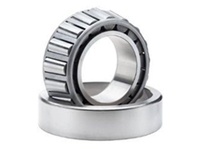
For anyone involved in manufacturing, understanding forging opens doors to creating components that can withstand extreme stress—something crucial for industries like automotive and aerospace. Let's break down how it works and why it might be the game-changer your project needs.
What Exactly is Forging?
Forging is a manufacturing process where metal is deformed under high pressure to achieve a specific shape. Unlike casting (where metal is melted and poured into a mold) or machining (where material is cut away), forging compresses the metal’s internal grain structure, making it continuous and aligned with the part’s contours. This grain flow is what gives forged components their exceptional toughness and resistance to impact .
Historically, forging was done by hand with hammers and anvils, but today, it’s evolved into a high-tech process using hydraulic presses, power hammers, and computer-controlled systems . The basic principle remains the same: apply force to reshape metal—whether it’s hot, warm, or cold.
️ Hot vs. Cold Forging: Which Should You Use?
The temperature at which forging occurs dramatically affects the results. Here’s a quick comparison:
Feature | Hot Forging | Cold Forging |
|---|---|---|
Temperature Range | Above metal’s recrystallization point (e.g., 950–1300°C for steel) | Room temperature or below 30% of recrystallization temp |
Best For | Large, complex parts like crankshafts or connecting rods | Smaller, precision items like bolts or fasteners |
Strength & Precision | Good strength; may require machining for fine tolerances | High dimensional accuracy; work-hardening adds strength |
Material Flexibility | Works well with iron, steel, and high-strength alloys | Ideal for ductile metals like aluminum or copper |
Hot forging is like kneading dough—it makes the metal easier to shape and reduces the force needed. It’s perfect for large parts where extreme strength matters more than perfect surface finish . Cold forging, on the other hand, is great for high-volume production of smaller parts. It’s more precise but requires stronger equipment due to the metal’s resistance at lower temperatures .
️ Common Forging Techniques Explained
Depending on your project, you might choose from several forging methods:
Open-Die Forging: The metal is placed between flat or simple-shaped dies and hammered repeatedly. It’s ideal for large, custom-shaped parts or rough-shaping ingots before further processing. Think of it as freeform forging where the operator controls the outcome by moving the workpiece .
Closed-Die Forging: Also called impression-die forging, this method uses dies that fully enclose the metal. The pressure forces the material to fill every cavity of the die, creating highly detailed shapes—like wrenches or engine valves. This is excellent for mass production since once the die is made, identical parts can be forged quickly .
Upset Forging: This technique increases the diameter of a workpiece by compressing its length. It’s widely used for making bolts, screws, and other fasteners .
Press Forging: Instead of a hammer’s impact, this applies slow, continuous pressure. It allows for greater control over deformation and is often used for complex geometries .
Each method has its pros and cons, but closed-die forging is generally preferred for high-strength, complex parts in industries like automotive and aerospace .
Why Choose Forging? Key Benefits at a Glance
Forged parts aren’t just strong—they offer several advantages that make them worth the investment:
Enhanced Strength: The forging process refines the metal’s grain structure, resulting in improved mechanical properties. Forged components typically have a 20% higher strength-to-weight ratio compared to cast or machined parts .
Reliability in Critical Applications: Forged parts are less prone to defects like porosity or shrinkage, making them a top choice for safety-critical uses—think landing gear in aircraft or valves in oil pipelines .
Material Efficiency: While some excess material (flash) may be trimmed off, forging minimizes waste by shaping the metal rather than cutting it away .
Cost-Effectiveness for Large Runs: Though die creation can be expensive, the per-part cost drops significantly with volume, making forging economical for mass production .
⚠️ Challenges and Considerations
Of course, forging isn’t without its hurdles. The initial setup—especially for closed-die forging—requires significant investment in dies and machinery . Additionally, hot forging demands precise temperature control to avoid issues like cracking or uneven deformation .
For those sourcing components, partnering with an experienced supplier can simplify things. Companies like Osten Machinery (Xuzhou) Co., Ltd. (TEL: +086 15852310290) offer expertise in global procurement of mechanical parts and engineering components, ensuring you get the right forged solutions for evolving industry needs.
My Take on Forging’s Future
From what I’ve seen, forging is far from obsolete. Advances in automation, simulation software, and hybrid processes (like combining 3D printing with forging) are making it even more precise and efficient . For startups or engineers, I’d recommend starting with a prototype—perhaps using open-die forging for flexibility—then scaling to closed-die for larger batches.
Whether you’re building a custom motorcycle or designing aerospace components, forging offers that unbeatable blend of strength and reliability. Have you considered it for your next project?
Forging, Metal Forming, Hot Forging, Cold Forging, Open-Die Forging, Closed-Die Forging, Press Forging, Upset Forging, Manufacturing Process, Steel Forging, Aluminum Forging, Blacksmithing, Drop Forging, Forging Techniques, Forging Applications, Forging Advantages, Forging Temperature, Forging Equipment, Forging Industry, Forging Materials
# Forging Materials
# Forging Industry
# Forging Equipment
# Forging Temperature
# Forging Advantages
# Forging Applications
# Forging Techniques
# Drop Forging
# Blacksmithing
# Aluminum Forging
# Steel Forging
# Manufacturing Process
# Upset Forging
# Press Forging
# Closed-Die Forging
# Open-Die Forging
# Cold Forging
# Hot Forging
# Metal Forming
# Forging
# What is Forging and How Can It Benefit Your Manufa
Related columns:
【
Industry news18872 】
【
Technology blog1420 】
Related recommendations:
好的,继续按循环模式输出。每个关键词每次生成1个标题,按顺序轮询,共2000个标题(即每个关键词约生成67个标题,但为了完整循环,我会持续输出直到达到2000条)。您可直接复制到.txt文件。
How to inspect slewing bearing gear teeth for case depth using portable hardness testing?
Are hydraulic fittings with NPT threads sealing on the threads or the shoulder, and which is correct
Fasteners_ How to Choose the Right Stainless Steel Fasteners for Your Project_
Adjustable Pulleys的全面解析:什么是可调滑轮健身机器?_如何正确安装可调滑轮?
How to remove an insert bearing from a stainless steel shaft using galling prevention paste during a
Chain Tension Control Systems_ What Are the Key Steps for Proper Adjustment and Maintenance_
How do ball bearing heat generation calculation (Watts) for high speed design?
Consumer Electronics Housing Plastic Parts_ How to Choose the Right Material for Durability and Cost
How to select rod end bearings for high oscillation applications where grease cannot be frequently r
What is the thrust roller bearing oil flow requirement (L/min) for high speed turbine applications?
Custom Size Timing Pulley Supplier China_ How to Ensure Precision_ What Are the Top Materials_
How do ball bearing retainer (cage) designs (crimped, machined, molded) affect maximum speed?
China Extrusions Manufacturer_ Best Price Aluminum Extrusion Manufacturer China_ Top 5 Picks Reveale
China Hydraulic Cylinders Factory with Custom Stroke Length_ How to Get the Perfect Fit for Your Mac
What spherical roller bearing cage material (brass, steel, polyamide) is best for high temperature?
Automation CNC Parts_ How to Choose High-Precision Components for Industrial Automation__What Are th
Graphite Impregnated Bushings_ What Are the Key Benefits and Why Choose Steel-Integrated Types_
What hydraulic cylinder tube hone finish is required for nitrile rubber piston seals?
What gearbox magnetic plug location (bottom, side, drain port) collects most ferrous debris?
Food Grade Plastic Parts _ How to Source Safely from China Manufacturers_
Are Chinese-made lathe machine rod end bearings reliable_
Custom Gearboxes Engineering_ How to Design Custom Gearboxes__Best Materials for Custom Gearboxes
What assembly ultrasonic sensor detects presence of o rings in blind counterbores?
China Lightweight Pulleys Factory with Aluminum Material_ Why Are High-Precision Aluminum Pulleys Be
Are hydraulic fittings with captive o rings easier to assemble than loose seal versions?
Why might mounted unit bearings with composite housings be used for corrosion resistance in chemical
Bespoke Forging Production_What are the key advantages and process steps for custom metal parts_
Do your power transmission chains require special master links for easy field repair?
China Injection Molded Parts Supplier, How to choose China Steel Mold Injection Supplier_ Key factor
Why might aluminum extrusions with cosmetic anodizing show die lines that your customer rejects?
What gearbox drain plug magnet material (neodymium, ceramic, alnico) for strongest field?
What assembly traceability marking (dot peen, laser, ink jet) survives shot blasting?
Bronze bushings for paper mill_How to choose the right bushings for paper mill equipment_
Why might aluminum extrusions with post machining be more cost effective than fully machined parts f
Chinese Heavy Duty Sprockets Manufacturer_What Should You Know About Industrial Roller Chain Sprocke
Can High-Speed CNC Turning Revolutionize Your Manufacturing Process_
Do your power transmission chains have stainless steel riveted pins for corrosion resistance?
Are plastic molded parts with insert molding for threaded inserts cost effective for high volume?
How to select hydraulic seal type (buffer, rod, piston, wiper) for telescopic cylinders?
Should thrust ball bearings be used in sets of four for bidirectional axial load?
How to measure pulley V groove included angle using a two ball method and calculation?
How to design a hydraulic seal gland for easy installation without damaging the sealing lip?
Are hydraulic fittings with o ring face seals (ORFS) interchangeable between different brands?
China Fasteners Supplier_ What Are Chemical Fasteners__How to Buy Roofing Fasteners_
How do pulleys help us lift heavy objects with less effort_
Automotive Transmission Chains_ CVT transmission chain maintenance tips & how to spot early
China Long Life Chains Factory with Self-Lubrication_how do self-lubricating chains achieve long ser
What linear bearing rail end stop design (pin, block, screw) prevents carriage over travel?
Custom Aluminum Extrusion Companies_ What Services Do They Provide and How to Choose__Aluminum Extru

