
Industry news
What are the key factors to consider when selecting a heavy-duty rod end_
So you're designing a heavy-duty mechanical system, and you've hit the point where you need to choose the right rod end. It might seem like a small component, but get it wrong, and it can lead to premature failure, downtime, or even safety issues. The question is, with so many options out there, how do you make the right choice? Let's break down what really matters.
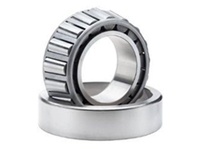
Heavy-duty rod ends, also known as Heim joints, are articulating joints used to connect components in a wide range of equipment, from steering links in vehicles to links in industrial machinery. They essentially provide a pivoting point that can accommodate misalignment while transmitting force. Unlike standard rod ends, heavy-duty versions are built to handle higher radial static loads and more punishing environments. They typically feature a more robust construction, often with a forged steel housing for increased strength .
Core Design and Material Choices
The performance of a rod end is largely determined by its internal bearing type and the materials used. There are a few common designs you'll encounter.
Rod Ends with Integral Spherical Plain Bearings: These are often the go-to for applications involving small swiveling or tilting movements at low speeds. Their strength lies in handling high loads, including shock loads. The ball slides on a plastic bearing shell, usually made from a material like a glass fibre-filled nylon/Teflon compound. This design is generally maintenance-free and can absorb small foreign particles without damage. The ball is often hard chrome-plated for corrosion resistance .
Rod Ends with Integral Ball Bearings: This design is your best bet for high speeds, large swiveling angles, or rotating movements. The key advantage is low bearing friction. These units are typically sealed and come with long-term greasing, making them maintenance-free under normal conditions. They are ideal for applications where smooth movement is critical, though they generally handle medium loads compared to their plain bearing counterparts .
PTFE-Lined Options: Many modern heavy-duty rod ends feature a permanently bonded PTFE (Teflon) liner. This liner minimizes friction and wear, offering self-lubricating performance that significantly reduces or eliminates the need for maintenance. This is especially valuable in corrosive or cleanroom environments where lubrication contamination is a concern .
When it comes to materials, the choice directly impacts strength and environmental resistance.
Alloy Steel: Often heat-treated and zinc-plated, this is a standard choice for high-strength applications in controlled environments. It provides an excellent balance of strength and cost .
Stainless Steel: For harsh environments—think marine applications, food processing, or chemical exposure—stainless steel is essential. Grades like 17-4 PH for the body and 440C for the ball offer a combination of high strength and superior corrosion resistance .
Chromoly Steel: This is a high-strength, low-alloy steel that offers an excellent strength-to-weight ratio, commonly used in demanding automotive and racing applications .
A Quick Comparison of Common Heavy-Duty Rod End Types
Feature | Spherical Plain Bearing (PTFE Lined) | Ball Bearing | Roller Bearing |
|---|---|---|---|
Best For | High loads, low speeds, shock loads | High speed, large angles, rotation | Very high loads with rotation |
Maintenance | Maintenance-free | Low maintenance, may have grease fittings | Low maintenance, may have grease fittings |
Friction | Slight initial friction | Very low friction | Low rolling friction |
Example Material | Steel or Stainless Steel with PTFE | Hardened Steel, Chrome Plated | Case-Hardened Steel |
Making the Right Selection for Your Application
Selecting the right rod end isn't just about picking the strongest one. You need to match its capabilities to your specific needs. Ask yourself these questions.
What are the Load and Motion Requirements? Is the primary load radial (perpendicular to the thread) or axial? What are the speed and angle of movement? For slow, heavy, oscillating movements, a spherical plain bearing rod end is likely sufficient. If the joint is rotating or moving rapidly, a ball bearing rod end is a better fit .
What is the Operating Environment? Will the rod end be exposed to moisture, chemicals, extreme temperatures, or abrasive contaminants? For corrosive environments, stainless steel is non-negotiable. The PTFE-lined versions are excellent for minimizing friction without external lubricants, which is perfect for cleanrooms or food-grade settings .
Thread Configuration and Size: Rod ends come with male (external) or female (internal) threads and are available in both right-hand and left-hand versions. Using a left-hand thread on one end and a right-hand on the other allows for easy length adjustment of a tie rod assembly . Sizes can range from as small as M5 up to M80 and beyond, so confirming the required thread size and shank diameter is a basic but critical step.
For engineers and procurement specialists who need a reliable global source for components like these, companies like Osten Machinery (Xuzhou) Co., Ltd. (TEL: +086 15852310290) can be a valuable partner, offering a wide range of mechanical parts and engineering components to meet diverse industrial demands.
Ultimately, the "best" heavy-duty rod end is the one that delivers reliable performance over the desired lifespan in your specific application without being over-engineered for the job. Taking the time to analyze the load, environment, and movement will point you toward the correct type. Don't just assume the most expensive option is necessary, but also avoid the trap of selecting a standard rod end for a truly heavy-duty task. The goal is to find that sweet spot where performance, durability, and cost meet.
Heavy Duty Rod End, Heim Joint, Spherical Plain Bearing, Ball Bearing Rod End, PTFE Lined, Stainless Steel Rod End, Alloy Steel Rod End, Radial Static Load, Maintenance-Free, Corrosion Resistance, High Precision Motion Control, Industrial Machinery, Automotive Steering, Linkage Assembly, Left Hand Thread, Right Hand Thread, Forged Steel Housing, Self-Lubricating, High Load Capacity, Rotary Motion
# What are the key factors to consider when selectin
Related columns:
【
Industry news18872 】
【
Technology blog1420 】
Related recommendations:
Can ball bearings with ceramic balls run without lubrication for short periods in vacuum application
How do you calculate taper roller bearing life when actual load differs from catalog rating?
What CNC machining coolant nozzle position (above, below, through tool) clears chips from deep bores
As an engineer, I need to choose between planetary and cycloidal gearboxes for high torque applicati
Agricultural Tractor Clutch Assembly_What is the difference between wet and dry clutch for agricultu
Female Rod End Bearings_How to buy Female Rod End Bearings__What are common problems with Female Rod
Custom Gearboxes Engineering_ What's the Step-by-Step Process from Design to Finished Product_
Automotive Transmission Chains_ CVT transmission chain maintenance tips & how to spot early
China Fasteners Factory with Custom Thread, How to Choose a Reliable Custom Thread Supplier, What Ar
Die Casting Mold Design Considerations_What are the key draft angle guidelines for successful produc
China Mining Forgings Supplier with Heavy Duty_ How to Choose the Best Mining Machinery Forging Part
Forklift Hydraulic Cylinders_What are small tonnage forklift hydraulic cylinders__How to maintain th
How can high pressure nozzles with ruby orifices provide precise flow control for fuel injection?
What fastener proof load test should you request to verify grade marking matches actual strength?
Can double ball bearings be used in a three row configuration for extreme moment loads?
Bulldozer Sprockets_High Strength Steel Bulldozer Sprockets_ Precision CNC Machined Bulldozer Sprock
What pulley taper lock bushing size fits your shaft after keyway cutting tolerances are considered?
What linear bearing rail end stop design (pin, block, screw) prevents carriage over travel?
Does your clutch assembly centrifugal weight design (segmented, full ring, puck) affect engagement s
Graphite Impregnated Bushings_How to install Graphite Impregnated Bushings_ What are their key advan
China Injection Molded Parts Supplier_ How to Choose a Reliable Partner for Custom Plastic Component
Are you tired of hydraulic fitting leaks_ Here's the real fix
Die Castings Manufacturing_ zinc alloy die casting suppliers_cold chamber die casting machine price_
Can double ball bearings be used in spindle applications with through spindle coolant?
What sprocket tooth profile modification (tip relief, root radius) reduces chain engagement noise?
Dental Equipment Die Castings_ What Are The Best Kits For Crowns_, How To Choose Aluminum Castings_,
Are plastic molded parts with mineral filled polypropylene suitable for high heat deflection (120°C)
How to measure pulley dynamic balance residual unbalance (gmm) per ISO 1940 grade G6.3?
What linear bearing life calculation factor should you use for contaminated environments without sea
Bushing Wear Resistance Solutions_ What Causes Bushing Failure, How to Choose Materials, and Where t
Are Made in China Office Furniture Fasteners Reliable_
Building Construction Extrusions_ 结构组件中的挤出工艺如何影响建筑性能?_如何优化?
China Bearings Manufacturer_Quality Standards_ What You Must Know Before Sourcing
China Bearings Manufacturer_ Top 100 Companies Revealed_ High Precision Cross Roller Bearings Qualit
What assembly line error proofing method prevents installation of wrong length fasteners?
Do wheel hub bearings for agricultural spreaders require stainless steel seals for fertilizer resist
What CNC machining tool path strategy (trochoidal, peel milling) reduces cutting forces on thin webs
How to select rod end bearings for aerospace control linkages where weight is critical?
China High Precision Metal Stamping Factory_ How to Control Tolerances Under ±0.01mm, Where to Find
High Temperature Plastic Molded Parts_ How to Choose Materials and Avoid Common Mistakes_
What forging blocker die design (closed, open, semi closed) minimizes material waste?
How Do Miniature Bearings Power Our Smallest Devices_
What sprocket tooth surface coating (DLC, TiN, CrN) reduces chain wear on high speed drives?
Die Castings, what are the key advantages of aluminum die castings, and how does mold design impact
Electronics Plastic Molded Parts_ How Can Precision and High Temperature Resistance Meet Demands_
Custom Rod End Bearings Supplier, How to Choose Male Thread Rod End Suppliers, and What Are Self-Lub
Why might angular contact bearings require matched pairs ground specifically for duplex mounting?
Die Casting Defect Reduction_ How to Reduce Porosity_ What Are the Root Causes_ Best Strategies for
How to calculate gearbox thermal power rating when operating in high ambient temperature conditions?
Graphite Impregnated Bushings_ What Are the Key Benefits and Why Choose Steel-Integrated Types_

