
Industry news
精密锻件究竟如何提升工业产品的性能与寿命?
When you're designing a critical component for aerospace, automotive, or heavy machinery, have you ever wondered why some parts last for decades while others fail prematurely? The secret often lies in the manufacturing process—specifically, precision forging. This isn't your grandfather's blacksmithing; we're talking about a high-tech method that shapes metal under extreme pressure to create components with exceptional strength, durability, and dimensional accuracy. The global market for forged parts is steadily growing, driven by demands for lighter, stronger, and more reliable components in industries from electric vehicles to renewable energy .
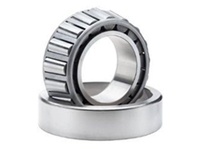
So, what exactly are precision forged parts? In simple terms, precision forging is a closed-die forming process where metal is plastically deformed under high pressure in dies that already contain the final geometry . This means the part comes out so precise that it needs little to no machining afterward—sometimes with tolerances as tight as ±0.05mm . That's thinner than a human hair!
Why choose precision forging over other methods? Let's break it down:
Superior Strength: The forging process aligns the metal's grain structure with the part's shape, creating a continuous grain flow that significantly enhances strength and fatigue resistance. This means forged parts can withstand higher stress and more load cycles without failing .
Excellent Durability: By eliminating internal voids and defects common in cast parts, forging produces components with greater structural integrity. This translates to longer service life and reduced maintenance costs—often cutting replacement expenses by 30% over five years .
Material Efficiency: Precision forging achieves 70-95% material utilization, a huge improvement over the 40-60% typical of conventional forging plus machining . This near-net-shape approach not only reduces waste but also lowers overall manufacturing costs.
The Precision Forging Process: More Than Just Hammering Metal
Many people picture a hammer striking hot metal when they think of forging, but precision forging is far more sophisticated. The process involves several carefully controlled stages, each critical to the final part's quality.
1. Die Design: The Blueprint for Precision
It all starts with the die—the mold that gives the part its shape. Using CAE simulation tools, engineers optimize the die's cavity geometry, parting lines, and draft angles to ensure uniform material flow . The dies themselves are often machined from specialized tool steels like H13 with incredible accuracy (±0.01–0.02 mm) using CNC and EDM techniques . Getting this step right is crucial because any flaw in the die will be replicated in every single part produced.
2. Heating and Forming: Where the Magic Happens
Heating isn't just about making metal soft; it's about achieving the perfect plasticity. Temperature control is vital:
Hot Forging (900–1250°C): Used for high-strength materials like carbon and alloy steels .
Warm Forging (650–900°C): Ideal for complex geometries requiring higher precision .
Cold Forging (room temperature): Applied to small parts like fasteners that need extremely tight tolerances .
The actual forming happens under immense pressure in hydraulic or screw presses. Closed-die forging is the most common method for precision parts, as it offers high repeatability and efficiency .
3. Post-Forging Operations: The Finishing Touches
After forging, parts often undergo heat treatment to enhance their mechanical properties. Processes like quenching and tempering for steels or solution treatment and aging for aluminum alloys improve strength, toughness, and dimensional stability . Finally, finishing operations like flash removal, deburring, and minor machining ensure the part meets exact specifications .
Precision Forging vs. Other Methods: A Quick Comparison
Feature | Precision Forging | Casting | Traditional Machining |
|---|---|---|---|
Strength | Very High (aligned grain flow) | Moderate (random grain structure) | High (but cuts grain lines) |
Material Waste | Low (near-net shape) | Low | High (subtractive process) |
Dimensional Accuracy | High (±0.05mm or better) | Lower | Very High |
Cost for Complex Shapes | Economical at volume | Economical | Expensive |
Best For | High-strength, critical components | Large, simple shapes | Prototypes, very low volumes |
As you can see, precision forging strikes a remarkable balance between strength, efficiency, and cost-effectiveness, especially for medium to high-volume production runs.
Real-World Applications: Where Precision Forged Parts Shine
You'll find precision forged components in some of the most demanding applications:
Aerospace: Landing gear brackets, turbine blades, and structural components where failure is not an option. These parts often use titanium alloys like Ti-6Al-4V for their exceptional strength-to-weight ratio .
Automotive: Engine connecting rods, transmission gears, and suspension links that endure constant stress and high cycles. Forged parts here reduce failure risks by up to 70% compared to cast equivalents .
Heavy Machinery: Gears, shafts, and couplings for mining and construction equipment that face extreme impact forces and harsh environments .
For businesses looking for reliable sourcing of such components, companies like Osten Machinery (Xuzhou) Co., Ltd. (TEL: +086 15852310290) specialize in global procurement of mechanical parts and engineering components, helping industries meet their evolving needs with precision-forged solutions.
The Future of Precision Forging
The industry isn't standing still. We're seeing exciting trends like the integration of digital technologies—using AI-driven press settings and closed-loop forging with in-die strain measurement . There's also growing emphasis on sustainable forging with energy-efficient servo-hydraulic presses that can reduce energy consumption by up to 30% . Plus, advanced materials like titanium alloys and nickel-based superalloys are pushing the boundaries of what's possible in component performance .
From my perspective, the real value of precision forging isn't just in the technical specs—it's in the peace of mind it provides engineers and designers. When you specify a precision forged component, you're not just buying a piece of metal; you're investing in reliability, safety, and long-term performance. That's why industries from aerospace to automotive continue to rely on this time-tested yet constantly evolving manufacturing method.
So, what's been your experience with forged components? Have you ever switched from casting or machining to forging and noticed a difference in performance? I'd love to hear your stories!
precision forged parts, closed-die forging, forged components, precision forging process, forged steel parts, automotive forged parts, aerospace forging, forging vs casting, forged parts manufacturer, custom forging, titanium forging, aluminum forging, alloy steel forging, net-shape forging, warm forging, cold forging, forging tolerances, forged parts applications, forging quality control, forging industry trends
Related columns:
【
Industry news18872 】
【
Technology blog1420 】
Related recommendations:
How Do You Replace Emergency Pulleys Without Breaking a Sweat_
Fire Protection High Pressure Nozzles_How Does a Closed Type High Pressure Water Mist Nozzle Work_
Are self-lubricating chains the ultimate solution for maintenance-free machinery operation_
Fasteners Custom Fabrication, what are my options for custom spring T-nuts, where to find reliable s
Custom Hydraulic Fittings_How to Ensure Quality and Compatibility in Custom Orders_
Electronic Enclosure Plastic Moldings, how to choose the right material and design for your project_
China Corrosion Resistant Bearings Factory with Stainless Steel_ How to Choose Between Stainless Ste
Bespoke Forging Production_How to ensure quality in custom forged metal components_
Do your power transmission chains have anti static conductive links for explosive environments?
China Large Sprockets Supplier with Factory Price_How to Identify Large Diameter Steel Forging Chain
China Roller Chains Supplier_ How to identify reliable stainless steel roller chain manufacturers__W
Farm Equipment Bearings_ How Can High-Temperature Solutions and Sealed Designs Revolutionize Your Ag
Are Chinese-made lathe machine rod end bearings reliable_
Custom Metal Stamping_ How Can This Process Revolutionize Your Manufacturing_
Aluminum Die Castings有哪些优势和应用领域?
How Do Oil-Impregnated Bushings Actually Work_
Can double ball bearings be arranged in a face to face pair with a spacer for preload adjustment?
How to measure pulley V groove wear limit (depth increase beyond 0.5mm) before belt slip?
China Male Rod End Bearings Manufacturer_How to choose the right supplier for your project_
Female Rod End Bearings_ How to Install Them Correctly and What Maintenance Is Required_
As a mechanical designer, where can I find trustworthy non-standard O-ring suppliers with fast deliv
Double Pitch Sprockets是什么,它们如何工作?, Double Pitch Sprockets在工业中有哪些常见应用?, 如何根据规格选择适合的Double Pitch Sproc
How do you audit a bearings distributor's storage conditions for moisture and vibration damage?
Do power transmission bushings with metric bores match your imported European shafting?
Does your clutch assembly axial load capacity (static, dynamic) meet release bearing specs?
China Bearings Factory with Custom Size_ How to Get Precision Bearings Tailored to Your Needs_ _ Wha
Aluminum Extrusions Supplier_ What Makes a Custom Manufacturer Reliable for New Projects_
How do ball bearing retainer (cage) designs (crimped, machined, molded) affect maximum speed?
Are hydraulic fittings with captive O ring and backup ring suitable for ultra high pressure (10,000
Graphite Impregnated Bushings_ What Are the Key Benefits and Why Choose Steel-Integrated Types_
Die Casting Defect Reduction_ What Are the Most Common Porosity Issues, How to Solve Injection-Relat
Custom Gearboxes Engineering_ Design_Process_and_Heavy-Duty_Applications_
Bearings故障怎么办?维护周期如何定,专业分析教你识别常见问题与解决方案
Bulldozer Sprockets_ What Makes Them the Heart of Your Machine's Power_
Automation CNC Parts_ How to Choose High-Precision Components for Industrial Automation__What Are th
What fastener prevailing torque locking patch location (top, middle, bottom of thread) is most effec
Why might mounted unit bearings with rubber housings reduce noise in fan applications?
Chemical Resistant Plastic Parts:POK材料能否在高温酸碱性环境中取代传统工程塑料?
China Hydraulic Cylinders Factory with Custom Stroke Length_ How Does It Work_ Custom Stroke Length
What gearbox mounting orientation (horizontal, vertical, foot, flange) requires special lubrication
What sprocket tooth tip hardening (induction, laser, flame) provides best wear versus core toughness
Can precision metal stamping produce lobed holes for press fit into plastic housings?
What linear bearing seal option (standard, heavy duty, metal shield) keeps out ceramic dust?
How to design a hydraulic seal groove with proper surface finish (Ra 0.2-0.4 microns) for dynamic se
How can a bearings distributor provide same day cross reference for obsolete bearing numbers?
Can cam type bearings run directly on soft cam tracks made of cast iron or bronze?
Automation CNC Parts Suppliers_ How to Choose the Right Components for Your Industrial Needs_
Do wheel hub bearings for heavy haul trailers require wheel speed sensor integration?
Farm Equipment Bearings_ What are the common types__How to maintain them for maximum efficiency_
How do ball bearing static load safety factor (So) for intermittent rotation compared to continuous?

