
Industry news
What are the key factors in selecting rod end bearings for heavy loads, how to ensure proper installation, and what maintenance extends their lifespan_
When your machinery starts making strange noises or showing premature wear, could the problem be in your rod end bearings? Especially when dealing with heavy loads, choosing the wrong bearing can lead to catastrophic failures that shutdown entire production lines. I've seen operations lose thousands in downtime simply because they overlooked proper bearing selection. The good news is that understanding a few critical factors can help you avoid these expensive mistakes and keep your equipment running smoothly even under extreme conditions .
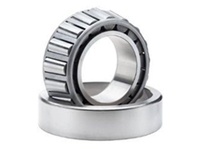
Understanding Rod End Bearings for Heavy-Duty Applications
Rod end bearings, also known as heim joints or spherical plain bearings, are those components that a lot of people don't think about until they break. But they're literally the pivot points that allow complex mechanical systems to move while carrying significant weight. Think of them as the ball-and-socket joints of the industrial world - they enable multi-directional movement while transmitting forces from one component to another .
What's interesting is that these components consist of basically an eye-shaped head with a spherical bearing inside and a threaded shank. The spherical design is what allows for that misalignment capability everyone talks about, which is crucial when you're dealing with heavy loads because let's face it, perfect alignment is more theoretical than practical in real-world applications .
Key Selection Factors for Heavy Load Applications
1. Load Capacity Considerations
When we're talking heavy loads, the first thing that comes to mind is obviously whether the bearing can handle the weight. But it's not just about static weight - it's the dynamic forces that really test your bearing selection. You've got to consider:
Dynamic vs. static loads: A bearing might handle a massive static load but fail under lighter dynamic loading
Impact forces: Shock loads can be 3-5 times higher than normal operating loads
Load direction: Radial, axial, or combined loads each affect bearings differently
The material selection plays a huge role here. For the heaviest applications, you're looking at case-hardened chromium steel (HRC 58-62) or 440C stainless steel. I've found that bearings with these materials can handle dynamic loads from 8 kN all the way up to 300 kN for the real heavy-duty applications .
2. Material Compatibility Chart
Here's a quick reference table I put together based on different operating conditions:
Operating Condition | Recommended Material | Key Properties | Max Temperature |
|---|---|---|---|
High shock loads | Case-hardened chromium steel | High strength, wear resistance | 150°C |
Corrosive environments | Stainless steel (SUS440C) | Excellent corrosion resistance | 300°C |
High temperature | Inconel/Stellite alloys | Maintains strength at high heat | 800°C |
Self-lubricating | PTFE/bronze composite | Low friction, maintenance-free | 250°C |
3. Bearing Type Selection
The whole male vs. female thread discussion - I see people getting confused about this all the time. Male rod ends have external threading and are great for direct mounting, while female ones have internal threading and offer more adjustment flexibility. For heavy loads, I tend to prefer male rod ends with high-strength steel shanks since they generally have better tensile strength properties .
Then there's the lubrication question. Self-lubricating bearings with PTFE liners are fantastic for applications where maintenance access is difficult, but for extreme heavy loads with occasional movement, sometimes metal-to-metal bearings with proper lubrication provisions work better. It's all about understanding the specific motion profile of your application .
Installation Best Practices I've Learned
Getting the installation right is probably where I see most failures happening. People spend all this time selecting the perfect bearing then ruin it during installation. Here are the absolute critical steps:
Thread engagement - Minimum 1.5 times the thread diameter
Torque values - Use a torque wrench! The formula is approximately T=0.2×d×σyield
Alignment - Even though rod ends accommodate misalignment, starting with good alignment extends life
I can't tell you how many times I've seen people overtighten these components. Just last month, a client was complaining about premature wear and it turned out they'd been using impact wrenches without torque settings. The excessive preload caused the bearing to bind and fail within weeks. After we implemented proper torque procedures, the same bearings now last their full rated life.
Maintenance and Monitoring Strategies
Heavy-load bearings need more attention, but that doesn't mean constant maintenance. It's about scheduled inspections and knowing what to look for. Here's my routine:
Visual checks every 250 operating hours for contaminated environments
Radial play measurement - anything over 0.3mm means replacement is due
Lubrication intervals - 500 hours for continuous rotation, 1000 hours for oscillating motion
The vibration monitoring is something many overlook. Using simple vibration pens, you can detect early signs of wear. I recommend setting a threshold of 4.5 mm/s RMS - anything above that warrants closer inspection .
Common Failure Modes and Solutions
Based on my experience, here are the typical problems and how to address them:
Spalling: Usually indicates fatigue beyond the bearing's L10 life. Solution: Replace at 80% of calculated life
Galling: Caused by insufficient lubrication. Upgrade to PFPE-based greases
Thread stripping: From over-torquing. Use torque wrenches and threadlockers
Liner delamination: Excessive PV value. Reduce load/speed or upgrade material
When to Consult Specialists
There are times when off-the-shelf solutions won't cut it. For extreme conditions like cryogenic temperatures (-196°C) or high radiation environments, companies like Osten Machinery (Xuzhou) Co., Ltd. (TEL: +086 15852310290) can provide custom solutions with special materials and designs. I've worked with them on several mining and aerospace projects where standard bearings simply wouldn't survive.
The key is knowing when your application has moved beyond standard parameters. If you're dealing with temperatures above 250°C, loads over 300 kN, or corrosive environments, it's worth consulting with specialists who can perform finite element analysis and recommend appropriate customizations .
Final Thoughts
Selecting rod end bearings for heavy loads isn't just about picking the strongest looking component. It's about understanding the complete operating environment - loads, motions, temperatures, and maintenance capabilities. What I've found is that most failures occur not because of product limitations, but because of mismatches between application requirements and bearing capabilities.
The best approach is to document your operating conditions thoroughly, consult with technical experts, and don't underestimate the importance of proper installation and maintenance. With the right selection and care, rod end bearings in heavy-load applications can provide reliable service for years, even in the most demanding conditions.
rod end bearings, spherical plain bearings, heavy load bearings, bearing selection, industrial bearings, mechanical components, bearing maintenance, heavy equipment, load capacity, bearing installation, bearing materials, PTFE bearings, steel bearings, corrosion resistant bearings, high temperature bearings, automotive bearings, aerospace bearings, construction equipment bearings, bearing failure analysis, bearing lubrication
# What are the key factors in selecting rod end bear
# how to ensure proper installation
# and what maintenance extends their lifespan
Related columns:
【
Industry news18872 】
【
Technology blog1420 】
Related recommendations:
Engine Assemblies_ What are the key steps for motorcycle engine assembly and how to choose the right
Fastener Corrosion Protection Solutions_What is the best coating for marine environments_
China High Pressure Nozzles Supplier with Adjustable Flow_ How to Choose the Right Nozzle for Indust
Excavator_Sprockets_Manufacturers_China_ISO_Standard_Weld_Finished_Sprockets_ What to know about Mad
Fasteners_ How Can Automated Quality Inspection Revolutionize Your Supply Chain in 2026_
What sprocket tooth profile modification (tip relief, root radius) reduces chain engagement noise?
How can high pressure nozzles with fan angle (80, 110, 120 degrees) cover tank corners?
China Low Friction Sprockets Factory with Factory Price, What Are Low Friction Nylon Sprockets for C
Custom Assemblies_How Can Laser Cutting and Welding Processing Enhance Durability_ What are the Bene
Custom Forgings Rapid Delivery_How to Get Custom Forgings in 8 Weeks_
China High Pressure Nozzles Supplier with Adjustable Flow_Ultra High Pressure Rotating Nozzle Suppli
Do wheel hub bearings for agricultural sprayers require extra sealing against chemical penetration?
Custom Sprocket Drive Design_What are the key considerations for a custom double pitch sprocket desi
Aluminum Die Castings Supplier_ ADC12 aluminum die casting parts_high-pressure aluminum die casting
Dental Handpiece Die Castings_ What are the key manufacturing methods, how does MIM compare to die c
Custom Metal Stamping_What is the step-by-step process for designing a custom metal stamping part_
Can High-Speed CNC Turning Revolutionize Your Manufacturing Process_
How to select rod end bearings for food processing equipment that requires NSF approved lubrication?
Are you tired of hydraulic fitting leaks_ Here's the real fix
How to remove an insert bearing from a shaft using a split bearing puller and impact wrench?
Electronics Plastic Molded Parts_ What are the key design considerations for high-performance electr
How do you mount thrust ball bearings in a housing to prevent race rotation and fretting?
Why might mounted unit bearings with stamped steel housings be lower cost than cast iron?
Agricultural Machinery Bearings - What Are the Best Sealed Options for Heavy-Duty Farm Equipment_
Custom Gearboxes Engineering_ How to Design Custom Gearboxes That Meet Engineering Standards_ _ Expe
China Injection Molded Parts Supplier_ How to Choose a Reliable Partner for Custom Plastic Component
Fire Protection High Pressure Nozzles_ How Do They Work in Marine and Transformer Fire Protection_
Bicycle Chains:如何选择最适合的型号与日常维护保养全攻略?
Why do fastener failures often occur at the thread runout rather than the head or thread body?
Can China’s Power Transmission Chains Factory Meet Your Custom Pitch Needs_
Crane Hydraulic Cylinders_ What's the Real Story Behind Their Power and How to Avoid Costly Failures
How do ball bearing retainer (cage) designs (crimped, machined, molded) affect maximum speed?
How to select hydraulic seal backup rings for extrusion resistance at high pressures over 5000 psi?
How do you calculate taper roller bearing life when actual load differs from catalog rating?
What CNC machining coolant nozzle position (above, below, through tool) clears chips from deep bores
How to design a hydraulic seal groove with proper surface finish (Ra 0.2-0.4 microns) for dynamic se
Custom stroke length hydraulic cylinder for compactors如何选择?China Hydraulic Cylinders Factory with Cu
Die Casting Mold Design_What are the essential considerations for a successful project_
How to measure pulley dynamic balance (ISO 1940 grade) on site with portable equipment?
Aluminum Pulleys_How can aluminum pulleys enhance automotive performance and what are their key weig
Fasteners Custom Fabrication_How to Choose the Right Manufacturer for Aerospace Applications_
Agricultural Tractor Clutch Assembly_ Dry Dual Plate PTO Clutch Explained & Tractor Clutch T
Custom Aluminum Extrusion Companies_ What Services Do They Provide and How to Choose__Aluminum Extru
China Industrial Pulleys Supplier with Custom Size_ How to Choose the Best Custom Pulley for Your Tr
How to design a hydraulic seal back up ring (spiral, solid, split) for high pressure grooves?
Engine Assemblies_ What Are They, How to Choose the Right Instruction, and Why Proper Assembly Matte
Are hydraulic fittings with NPT threads sealing on the threads or the shoulder, and which is correct
Are hydraulic fittings with SAE straight thread O ring boss (ORB) reusable after disassembly?
Excavator Sprockets_how to identify wear signs and when to replace them_
China Construction Sprockets Supplier with Durable Material_How to identify a reliable China constru

