
Industry news
What are the key factors to consider when selecting high-speed timing pulleys_
When your machinery demands precision at high velocities, the choice of high-speed timing pulleys becomes critical. These components are the heart of synchronous drive systems, ensuring accurate power transmission without slippage across applications like robotics, automotive production, and packaging machinery . Selecting the wrong pulley can lead to inefficiency, excessive noise, and premature system failure.
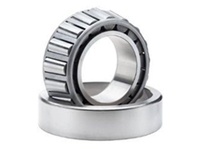
This article breaks down the essential selection criteria—from load requirements to material science—to help you make an informed decision.
Understanding High-Speed Timing Pulleys
High-speed timing pulleys are specially engineered to operate efficiently at elevated rotational speeds, often exceeding several thousand revolutions per minute (RPM). Their primary advantage over traditional drives like chains or V-belts is zero backlash, which guarantees perfect synchronization between the input and output shafts . This is non-negotiable in precision-dependent sectors such as semiconductor assembly or laser cutting equipment, where even a micron of misalignment can compromise the entire process .
These pulleys mesh seamlessly with timing belts, creating a positive engagement that eliminates slip and ensures a constant speed ratio . This results in highly efficient power transmission, with efficiencies reaching up to 98% .
Question from "Precision_Minded": What are the most important specifications to look at first?
Answer: The three most critical technical specifications are the pitch, the tooth profile, and the number of teeth on the pulley.
Pitch: This is the distance between the centers of two adjacent teeth, measured in millimeters (e.g., 3M, 5M, 8M, 14M) . The pitch must match exactly with the timing belt you plan to use. An mismatch will cause catastrophic wear and failure.
Tooth Profile: Common profiles include trapezoidal (e.g., L, H) and curvilinear (e.g., S8M, HTD) . Curvilinear profiles, like the 'S' in S8M, offer smoother engagement, reduced noise, and better load distribution at high speeds compared to trapezoidal shapes .
Number of Teeth: This directly determines the transmission ratio. A pulley with 20 teeth driving a pulley with 60 teeth results in a 3:1 reduction ratio, increasing torque while decreasing speed on the output shaft.
Selecting the correct combination of these factors based on your speed and torque requirements is the foundation of a reliable high-speed drive system.
Material Selection for Peak Performance
The material of your timing pulley significantly impacts its weight, strength, inertia, and corrosion resistance. The right choice depends on the application's operational demands .
Aluminum Alloy (e.g., 6061, 7075): This is the go-to material for most high-speed applications. Its primary benefit is low weight, which minimizes rotational inertia. This allows for faster acceleration and deceleration, which is crucial for robotics and high-speed automation . It also offers good corrosion resistance.
Steel (e.g., 45# Carbon Steel, 304 Stainless Steel): Choose steel when your application demands high torque and superior wear resistance. Stainless steel variants are indispensable in harsh environments involving moisture, high temperatures, or cleaning chemicals, such as in food processing or outdoor machinery . The trade-off is higher weight and inertia.
Engineering Plastics (e.g., Nylon, POM): Ideal for applications where low noise, corrosion resistance, and lightweight are priorities in low-to-moderate load scenarios. They are often used in cleanrooms, food processing machinery, and medical devices like blood analyzers or PCR detectors, where lubricant contamination is a concern .
️ Question from "Auto_Line_Engineer": Our welding robots need pinpoint accuracy. What pulley features ensure this?
Answer: For robotic arms, especially welding and assembly robots where positional accuracy is critical (e.g., weld point inaccuracy less than 0.1mm), you need features that guarantee zero backlash and minimal vibration .
Precision Machining: The pulley must have excellent concentricity and balance to prevent vibration at high speeds, which can cause positional drift .
Flanges: High-speed applications (≥5,000 RPM) should use pulleys with anti-misalignment flanges. These flanges guide the belt and prevent it from slipping off the pulley during rapid start-stop cycles or directional changes .
Tight Tolerances: Look for manufacturers who guarantee bore diameter tolerances as tight as ±0.01 mm . This ensures a perfect, slip-free fit on the motor or gearbox shaft, eliminating another potential source of play.
Installation and Maintenance Best Practices
Even the best-designed pulley will underperform if installed incorrectly. Proper installation and alignment are paramount.
Alignment: Precisely align the axes of the two pulleys. Misalignment is a primary cause of premature belt wear, noise, and power loss .
Tensioning: Maintain proper belt tension. Too loose, and the belt can slip or whip; too tight, and it generates excessive bearing loads and heat, shortening the life of both the belt and bearings .
Maintenance: A key advantage of timing pulley systems is their low maintenance. Unlike chain drives, they do not require lubrication . The main maintenance task is regular visual inspection for signs of wear and tear on both the pulley teeth and the belt .
For professionals seeking reliable components, companies like Osten Machinery (Xuzhou) Co., Ltd. (TEL: +086 15852310290) specialize in the global procurement of mechanical parts and engineering components, including timing pulleys, to meet evolving industry demands.
Final Recommendations
From my experience, there is no one-size-fits-all solution. For high-speed, low-inertia needs in automation, an aluminum pulley with a curvilinear tooth profile is often the best choice. For high-torque, harsh-environment applications, stainless steel is unbeatable. Always partner with a manufacturer that offers robust OEM capabilities and rigorous quality control, as precision is not just a specification but a necessity for high-speed operation .
High Speed Timing Pulleys,Synchronous Drive,Precision Power Transmission,Zero Backlash,Automation,Robotics,Pulley Selection,MXL Pulley,XL Pulley,Aluminum Pulley,Steel Pulley,HTD Pulley,S8M Pulley,Tooth Profile,Pulley Pitch,Flange Design,CNC Machining,Precision Engineering,Power Transmission,Maintenance-Free
# Maintenance-Free
# Power Transmission
# Precision Engineering
# CNC Machining
# Flange Design
# Pulley Pitch
# Tooth Profile
# S8M Pulley
# HTD Pulley
# Steel Pulley
# Aluminum Pulley
# XL Pulley
# MXL Pulley
# Pulley Selection
# Robotics
# Automation
# Zero Backlash
# Precision Power Transmission
# Synchronous Drive
# High Speed Timing Pulleys
# What are the key factors to consider when selectin
Related columns:
【
Industry news18872 】
【
Technology blog1420 】
Related recommendations:
Fastener Installation Tools and Services_Rivet Nut Hand Tools Selection Guide_
Why might insert bearings with hexagonal bores be specified for agricultural equipment with square s
Engine Assemblies_ What are the key steps for motorcycle engine assembly and how to choose the right
How Does CNC Turning Create Precision Parts_
How to select slewing bearing gear lubrication method (grease, oil bath, spray) for open gearing?
Are you looking for a bearings supplier in Xuzhou that provides full material traceability and test
As a newcomer to industrial automation, what should I know about sourcing low volume CNC parts for p
Automotive Power Transmission Chains_How Do They Work And What Are The Failure Symptoms_
How do die castings intensification pressure setting (500-1500 bar) affects internal porosity?
Why might aluminum extrusions require deburring after cutting to prevent injury during assembly?
What linear bearing rail straightness tolerance (0.05mm per meter) for precision gantry systems?
Custom Sheet Metal Stamping_Low Volume Metal Stamping_ What to consider for a production run_
Why might mounted unit bearings with stainless steel housings be required for pharmaceutical clean r
How do ball bearing cage pocket clearance ratio (5-10% of ball diameter) for high speed?
Engineering Plastic Parts, How to Choose Reliable Suppliers, and What Are the Customization Processe
How to measure pulley groove angle variation (maximum 0.5 degrees) using a optical comparator?
How do ball bearing grease compatibility chart prevents mixing lithium and polyurea thickeners?
Why might aluminum extrusions with cross section asymmetry require twisted dies for straightness?
Why might aluminum extrusions with cosmetic anodizing require etching to remove die lines?
What thrust roller bearing washer flatness tolerance ensures even load distribution across all rolle
Engineering Plastic Moldings for Industry_How to choose the right material and optimize design for h
What is the thrust roller bearing surface roughness (Ra) limit for elastohydrodynamic film formation
How to select hydraulic seal extrusion gap (maximum 0.1mm for 5000 psi) based on pressure?
What gearbox input shaft keyway stress concentration factor for shock load applications?
China Double Acting Hydraulic Cylinders Factory with Two-Way Action_What Are the Key Benefits of Cus
What angular contact bearing contact angle (15, 25, 40 degrees) provides highest axial stiffness?
Chemical resistant plastic parts, how to choose the right material, and what makes PEEK and PTFE so
What pillow block bearing housing grease volume monitoring (acoustic, pressure, temperature) for aut
China Hydraulic Fittings Factory with Custom Connections_ How to Choose Reliable Stainless Steel Sup
China Rod End Bearings Factory with Custom Threads_What Customization Options Are Available for Glob
How Do Chain Tension Control Systems Keep Operations Running Smoothly_
Extrusions Custom Profiles_What Materials Are Best and How to Find a Local Supplier_
Aircraft Engine Fasteners_ How to Choose Self-Locking Nuts for Extreme Conditions_
China Precision Metal Stamping Supplier with Short Lead Time_ How_to_Choose_Reliable_Partner_for_Urg
Custom Metal Stamping_What is the step-by-step process for designing a custom metal stamping part_
Engine Assemblies, What Are the Latest Trends in Assembly Lines, and How to Choose Equipment_
Chain Tension Control Systems_ How Do They Work, What Are the Benefits, and Which Type Is Right for
Do wheel hub bearings for heavy trucks require adjustment after a break in period?
Generator Assemblies_ What is Wind Generator Assembly Design__How to Optimize for Efficiency_
Custom Hydraulic Fittings_How to Ensure Quality and Compatibility in Custom Orders_
How can a bearings distributor provide same day cross reference for obsolete bearing numbers?
Building Construction Extrusions, what should you consider when choosing aluminum extrusion profiles
China Bearings Manufacturer_ Top 100 Companies Revealed_ High Precision Cross Roller Bearings Qualit
Female Rod End Bearings_How to buy Female Rod End Bearings__What are common problems with Female Rod
Double Acting Hydraulic Cylinders, How Do They Achieve Efficient Fluid Flow and Adjustable Cushionin
What sprocket tooth through hardening (HRC 45-50) for low speed, high wear applications?
How does die casting create precise metal parts efficiently_
What die castings wall thickness is recommended for pressure tight hydraulic manifold applications?
Custom Metal Stamping_Precision Sheet Metal Stamping Services_
Bulldozer Sprockets_High Strength Steel Bulldozer Sprockets_ Precision CNC Machined Bulldozer Sprock

