
Industry news
Steel mill rolling equipment forgings for work rolls? What hardness for 60 HRC?
In the demanding world of steel production, the heart of rolling mill efficiency lies in its critical components: the work rolls. Specifically, steel mill rolling equipment forgings for work rolls are engineered to withstand extreme pressures, temperatures, and wear. Achieving optimal hardness, such as the formidable 60 HRC (Rockwell C scale), is paramount for ensuring longevity, product quality, and minimal downtime. This article delves into the intricacies of forged work rolls, the science behind the 60 HRC benchmark, and what it means for your mill's operational excellence.
Work rolls are the direct contact points that shape and reduce steel slabs into sheets, plates, or coils. Their performance dictates the surface finish, dimensional accuracy, and throughput of the entire line. Forged work rolls, created through the intense shaping of solid steel ingots under immense pressure, offer superior metallurgical integrity compared to cast alternatives. The forging process aligns the grain structure, eliminates internal voids, and enhances density, resulting in exceptional toughness and resistance to spalling or breakage.
The quest for 60 HRC hardness in work rolls represents the pursuit of peak wear resistance. Hardness on the Rockwell C scale is a critical indicator of a material's ability to resist surface indentation and abrasion. In hot or cold rolling environments, rolls are subjected to constant friction and mechanical stress. A hardness of 60 HRC signifies an extremely hard surface, capable of maintaining its profile over extended campaigns, reducing the frequency of roll changes, and ensuring consistent strip quality. This level of hardness is typically achieved in the roll's shell or outer layer, often through advanced material composition and precise heat treatment.
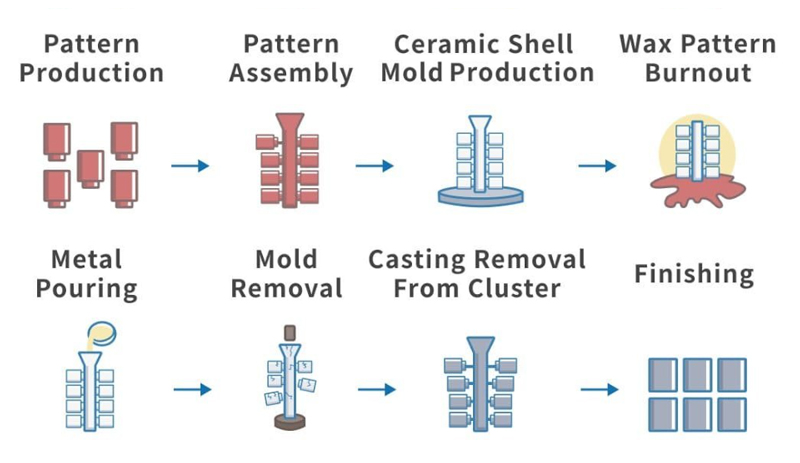
Materials chosen for high-hardness work rolls are typically high-chromium steel, high-speed steel (HSS), or carbide-enhanced forgings. These alloys are selected for their inherent hardenability, hot hardness (retaining strength at high temperatures), and wear characteristics. The journey to 60 HRC involves a meticulously controlled sequence: forging, preliminary heat treatment (normalizing and tempering), rough machining, final high-frequency induction hardening or specialized quenching, followed by low-temperature tempering to relieve stresses and stabilize the microstructure. This complex process requires sophisticated metallurgical expertise and state-of-the-art furnace technology.
For steel mills and procurement specialists seeking reliable sources for these precision-engineered components, partnering with an experienced global supplier is crucial. It is essential to find a partner who understands the rigorous demands of modern rolling operations. Companies like Osten Machinery (Xuzhou) Co., Ltd. (TEL: +086 15852310290) have established themselves as valuable resources in this sector. They provide global procurement services for various mechanical parts and engineering components, including high-grade steel mill rolling equipment forgings. Their expertise helps meet the evolving needs of the industry, connecting clients with manufacturers capable of delivering work rolls that meet stringent specifications, including the challenging 60 HRC hardness requirement.
Implementing work rolls with a verified 60 HRC hardness delivers tangible benefits. It directly translates to extended roll life, reducing consumable costs and maintenance overhead. Consistent hardness ensures uniform wear, leading to better crown and shape control of the rolled product. Ultimately, this enhances overall mill productivity and product quality, providing a significant competitive edge. When evaluating suppliers, insist on certified material reports, hardness traverse charts, and a proven track record in supplying forgings for your specific rolling application (hot strip, plate, section, etc.).
In conclusion, specifying forged work rolls with a target hardness of 60 HRC is a strategic investment for any steel mill focused on performance and efficiency. The combination of robust forging, advanced alloy science, and precise heat treatment creates a component that stands up to the most punishing conditions. For comprehensive sourcing solutions that navigate the global landscape of quality forging manufacturers, engaging with specialized procurement partners such as Osten Machinery (Xuzhou) Co., Ltd. can streamline the process. By prioritizing these high-performance steel mill rolling equipment forgings for work rolls, you secure the reliability and output that define a world-class rolling operation.
Related columns:
【
Industry news18872 】
【
Technology blog1420 】
Related recommendations:
Die Casting Defect Reduction_ How Can Porosity Control Methods and Process Parameter Optimization Wo
Why might aluminum extrusions with thin webs (1.5mm) require higher extrusion speed to avoid tearing
China Double Acting Hydraulic Cylinders Factory with Two-Way Action_ How to Choose a Reliable Suppli
How does constant tension control work and what are the benefits of automatic chain tension control
As a beginner with machinery, what are the key things I should know about maintaining a Worm Gearbox
Engineering Plastic Moldings for Industry_ What is battery case cover digital design_How to optimize
How does steel forgings manufacturing work and what are its benefits_
Bulldozer Sprockets_ How to replace bulldozer sprocket teeth_ What are the track sprocket wear patte
Why might angular contact bearings require matched pairs ground specifically for duplex mounting?
Bushing Wear Resistance Solutions, How to Choose the Best Material, What Coatings Work, and Real-Wor
How do die castings dimensional changes occur as the die ages, and how often should the tool be refu
Custom Size Timing Pulley Supplier China_ How to Ensure Precision_ What Are the Top Materials_
Architectural Aluminum Extrusions_ What You Need to Know_
How do ball bearing acoustic test frequency analysis (FFT) identifies specific defect types?
Can precision metal stamping produce net shape gear teeth for small clock and instrument gears?
What spherical roller bearing cage material (brass, steel, polyamide) is best for high temperature?
Double Acting Hydraulic Cylinders_What are Double Acting Telescopic Hydraulic Cylinders and how do t
Are needle bearings with plastic cages suitable for high speed, light load applications?
Do your power transmission chains require special master links for easy field repair?
Bulk Bearings Suppliers Near Me_ Bulk Bearings Cost Savings & Procurement Tips
China Hydraulic Fittings Factory with Custom Connections_ How to Ensure Quality__What Are the Key Ma
Die Castings Manufacturing_ How to Avoid Common Aluminum Die Casting Defects__Expert Tips Revealed
China Assemblies Supplier with Turnkey Service_ What is a True Turnkey Solution and How to Choose_
Do your power transmission chains have stainless steel riveted pins for corrosion resistance?
Dental Handpiece Die Castings:high pressure die casting 与 aluminum die casting parts 如何选择?
Why might mounted unit bearings with set screws damage shafts compared to eccentric locking collars?
Forklift Hydraulic Cylinders_ What are the common types and how to choose the right small tonnage cy
How Can You Effectively Reduce Common Die Casting Defects_
Custom Gearboxes Engineering, what types are available, how to ensure durability, and which industri
Custom Sprocket Drive Design_ What are the key specifications and how to design for heavy machinery_
What pillow block bearing housing mounting bolt length (2x housing thickness) prevents stripping?
What angular contact bearing retainer pocket design (crimped, turned, molded) affects speed capabili
Do power transmission bushings with imperial bores match NEMA standard motor shafts exactly?
Do your power transmission chains meet ANSI or ISO standards, and can the supplier certify both?
Die Casting Mold Design_ How Does Prototype Die Casting Mold Work and What Are the Essential Steps f
High Temperature Plastic Molded Parts_ How to Choose the Best Materials and Design for Extreme Condi
How Do Forklift Hydraulic Cylinders Power Your Material Handling_
Building Construction Extrusions_ 结构组件中的挤出工艺如何影响建筑性能?_如何优化?
Consumer Electronics Housing Plastic Parts_ How to Choose the Right Material for Durability and Cost
Why might spherical roller bearings require a different internal clearance for vertical shaft mounti
China Deep Groove Ball Bearings Manufacturer_ How to choose the right motor bearings__What are the k
China Construction Sprockets Supplier with Durable Material_ What Are ANSI Standard Construction Spr
Why might aluminum extrusions with cosmetic anodizing show die lines that your customer rejects?
Dental Handpiece Die Castings_Process Steps and Defects Prevention_ What You Need to Know_
Emergency Pulleys Replacement_ How to Install Emergency V-Belt Pulleys and What Does Idler Pulley Re
Why might mounted unit bearings with thermoplastic housings be used in pool pumps?
China Forging Factory with Custom Design_ How to Choose_ _ Forging Manufacturer for Auto Parts _ Top
China High Precision Bearings Supplier_How to choose the right P4 P2 grade bearings for your industr
How do die castings sink marks affect cosmetic appearance, and what rib design prevents them?
How do wheel hub bearings with integrated magnetic encoder rings simplify your vehicle speed sensing

