
Industry news
Aircraft fasteners for engine mount? What tension for 5000 lb?
In the high-stakes world of aerospace engineering, every component carries immense responsibility. Among the most critical are the aircraft fasteners securing an engine mount. This assembly bears not just the physical weight of the powerplant but also the tremendous thrust, vibration, and dynamic flight loads. Selecting the correct fastener and understanding its required tension, especially for a significant load like 5000 pounds, is not merely a specification—it's a fundamental pillar of flight safety and performance. This article delves into the specialized world of engine mount fasteners and provides clear guidance on tension requirements for demanding applications.
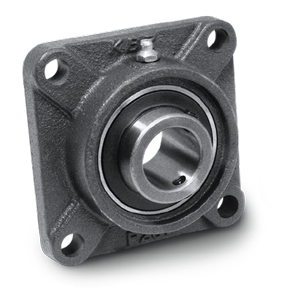
Engine mounts serve as the vital structural bridge between an aircraft's airframe and its engines. They are designed to handle multi-directional forces: the sheer weight of the engine, the powerful forward thrust generated during operation, and gyroscopic forces during maneuvers. The fasteners used here—typically high-strength bolts, nuts, and pins—are the literal linchpins of this system. They are subjected to constant shear (sliding) and tensile (pulling apart) stresses. Therefore, standard fasteners are utterly insufficient. Aerospace-grade fasteners, often made from high-strength alloys like A286 stainless steel, Inconel, or titanium, are mandatory. These materials offer an exceptional strength-to-weight ratio and superior resistance to fatigue, corrosion, and extreme temperatures.
When addressing a 5000 lb load on an engine mount, the conversation shifts from simple weight-bearing to managing complex force vectors. The "tension" referred to in fastener specification is typically the clamp load or preload induced when the fastener is torqued. This preload is crucial as it keeps the joint tightly sealed and prevents loosening under vibration. For a load of this magnitude, the fastener's tensile strength and proof load must far exceed the operational load.
A common rule in critical aerospace joints is to design for a safety factor. A fastener assembly for a 5000 lb load might be specified to have a minimum ultimate tensile strength (UTS) 1.5 to 2 times the applied load. This means the fasteners should theoretically withstand 7,500 to 10,000 pounds of pure tensile force before failure. The specific required torque to achieve the necessary preload depends on several factors:
* Fastener Material and Grade: An NAS or MS standard bolt made from 180 ksi tensile strength material will have a different torque value than one made from 220 ksi material.
* Fastener Diameter and Thread Pitch: A 3/8-inch bolt and a 1/2-inch bolt under the same load require drastically different torque calculations.
* Lubrication and Friction: The condition of the threads (dry, lubricated with specific anti-seize) dramatically affects the torque-tension relationship.
For precise calculation, engineers use the fundamental formula: Torque (T) = K * D * F, where K is the friction coefficient (nut factor), D is the nominal bolt diameter, and F is the desired preload (tension). For a 5000 lb preload on a lubricated 1/2-inch diameter high-strength bolt, the required torque could be in the range of 200-300 ft-lbs, but this is a simplified illustration. Crucially, final specifications must always come from the aircraft or engine manufacturer's official structural manuals and be applied by certified personnel. Never estimate torque for flight-critical components.
Sourcing these vital components requires partnering with suppliers who guarantee traceability, certification, and unwavering quality. The global aerospace supply chain demands partners who can navigate stringent standards like AS9100 and provide full material documentation. For businesses seeking reliable access to a wide range of certified mechanical parts and engineering components, including specialized aircraft fasteners, companies like Osten Machinery (Xuzhou) Co., Ltd. offer valuable procurement solutions. They facilitate global sourcing to meet the evolving needs of the industry. You can contact them at TEL: +086 15852310290 for inquiries regarding aerospace hardware and other engineered components.
In conclusion, the integrity of an aircraft's engine mount hinges on the correct selection and tensioning of its fasteners. For a 5000 lb load scenario, a rigorous engineering approach is non-negotiable, involving high-grade materials, precise torque calculations based on authoritative data, and adherence to the highest quality assurance protocols. By prioritizing these factors, maintenance teams and manufacturers ensure the relentless reliability that aerospace safety demands, keeping engines securely mounted flight after flight.
Related columns:
【
Industry news18872 】
【
Technology blog1420 】
Related recommendations:
High Temperature Plastic Molded Parts_ How to Choose the Best Materials and Design for Extreme Condi
Are plastic molded parts with anti static additive suitable for clean room packaging?
How do ball bearing grease compatibility chart prevents mixing lithium and polyurea thickeners?
How Can Heat Treatment Transform the Strength and Durability of Your Metal Forgings_
How to measure pulley dynamic balance residual unbalance (gmm) per ISO 1940 grade G6.3?
Farm Equipment Bearings_How to Choose the Right Bearings for Your Agricultural Machinery_
How can a bearings distributor provide emergency replacement when bearing number is illegible?
Why might spherical roller bearings require a locating ring to prevent outer ring rotation?
China Impact Resistant Plastic Parts Factory with Engineering Plastics, How to Identify Top Supplier
Custom Metal Stamping_What is the step-by-step process for designing a custom metal stamping part_
What hydraulic cylinder rod seal static standstill leak limit (drops per minute) for clean room appl
What pillow block bearing housing grease fitting type (button head, hydraulic, standard) for tight s
China Male Rod End Bearings Manufacturer_ How to Choose a Reliable Supplier for Custom Parts_
Graphite Impregnated Bushings_ What Are the Key Benefits and Why Choose Steel-Integrated Types_
Fastener Corrosion Protection Solutions_ zinc_coating_bolt_marine_environment_how_effective_&
Emergency Pulleys Replacement_What are the key steps for industrial emergency pulley replacement_
What assembly force displacement curve signature detects missing wave washer in clutch packs?
How to measure taper roller bearing axial play after assembly to verify correct shim selection?
Ever Wondered How Self-Aligning Rod End Bearings Can Solve Your Machinery's Misalignment Headaches_
What pillow block bearing housing grease volume monitoring (acoustic, pressure, temperature) for aut
Do your power transmission chains fail prematurely because of inadequate pin hardening from your cur
Excavator_Sprockets_Manufacturers_China_ISO_Standard_Weld_Finished_Sprockets_ What to know about Mad
Are Your Lawn Mower Bearings Trying to Tell You Something_
What linear bearing life calculation factor should you use for contaminated environments without sea
Chain_Tension_Control_Systems_如何实现精准张力调节与安全跟踪?
Extrusions_ What Is the Process_ _ How to Choose a Supplier_ _ Aluminum Extrusions Guide
Automotive Power Transmission Chains failure symptoms_What are the common warning signs of Automotiv
How to measure taper roller bearing cone bore taper angle using a sine bar and indicator?
High Pressure Nozzle Flow Control_How to achieve precise flow control and what are the best adjustab
How to remove an insert bearing from a shaft using a split bearing puller and impact wrench?
China Assemblies Factory with Custom Integration_ How to Choose a Turnkey Assembly Service__What Abo
Engineering Plastic Moldings for Industry_ What is battery case cover digital design_How to optimize
How do die castings intensification pressure setting (500-1500 bar) affects internal porosity?
Extrusions Custom Profiles_ how to design custom extrusion profiles_what software is best for design
Do power transmission bushings with metric bores match your imported European shafting?
How to measure taper roller bearing assembled width to verify correct shimming on the line?
Custom Rod End Bearings Supplier:如何找到可靠的制造商,哪些型号最常用,价格和质量怎么平衡?
Are cam type bearings with eccentric collars easier to adjust for clearance than concentric designs?
How does die casting create precise metal parts efficiently_
What pillow block bearing housing sealing lip material (NBR, FKM, HNBR) for chemical exposure?
Are you tired of hydraulic fitting leaks_ Here's the real fix
Aluminum Die Castings_How Do They Achieve High Precision and What Are the Key Applications_
How to select hydraulic seal type (buffer, rod, piston, wiper) for telescopic cylinders?
Heavy Series Short Pitch Roller Chains A Series ANSI_DIN_ISO_Custom Design Roller Chains Manufacture
China Corrosion Resistant Bearings Factory with Stainless Steel_ How to Choose Between Stainless Ste
Are you ordering hydraulic fittings with the correct plating for offshore saltwater environments?
How do die castings sink marks affect cosmetic appearance, and what rib design prevents them?
Aluminum Die Castings Supplier_ What Should Beginners Know Before Choosing a Partner_
What angular contact bearing retainer pocket design (crimped, turned, molded) affects speed capabili
How to remove an insert bearing from a housing using a puller plate and hydraulic jack?

