
Industry news
Bearings making noise at startup? Wrong internal clearance or lubrication issue?
When machinery roars to life in the morning or after a period of inactivity, a common concern emerges: bearings making noise at startup. This high-pitched squeal, grinding sound, or irregular rumble is more than just an annoyance—it is a clear signal that something is wrong. For manufacturers, maintenance engineers, and procurement specialists, understanding the root cause is essential to avoid costly downtime, premature component failure, or even catastrophic equipment damage.
The two most frequent culprits behind bearing noise at startup are incorrect internal clearance and lubrication issues. Let us dissect each factor thoroughly.
Wrong Internal Clearance: The Silent Saboteur
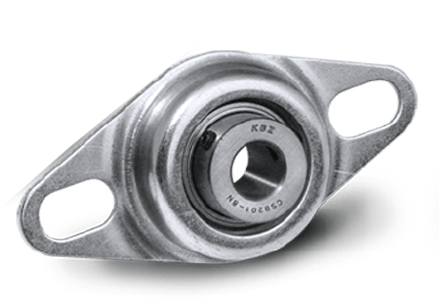
Bearing internal clearance, or the radial and axial play between rolling elements and raceways, is engineered for specific operating conditions. A bearing with insufficient internal clearance (too tight) will generate excessive heat and friction when the shaft expands during operation—but at startup, the problem manifests as a stiff, noisy rotation. Conversely, excessive clearance (too loose) allows the rolling elements to skid or impact the raceways, producing a rattling or knocking sound until full speed and temperature stabilize.
Key indicators of clearance-related startup noise include:
- A metallic scraping or grinding noise that subsides as the bearing warms up.
- Vibration spikes in the initial 30 seconds of operation.
- Premature wear patterns on raceways or rolling elements.
Choosing the correct C3 or C4 clearance (or custom clearance) based on the application’s thermal expansion, shaft fit, and housing fit is critical. For high-speed or high-temperature machinery, a deeper analysis of operating clearance versus mounting clearance is mandatory.
Lubrication Issues: The Lifeblood Gone Wrong
Lubrication problems at startup often stem from improper grease selection, insufficient quantity, or lubricant starvation after extended shutdown. When a machine sits idle, grease can settle, separate, or harden, leaving bearing surfaces inadequately protected during the first rotations. The result is metal-to-metal contact that generates noise, elevated friction, and accelerated wear.
Common lubrication-related noise patterns include:
- A high-pitched squeal that fades after a few revolutions (grease starvation).
- A chattering or stick-slip sound (incompatible grease base oil).
- Irregular noise with temperature spikes (over-greasing causing churning).
The remedy lies in using the correct NLGI grade grease, proper relubrication intervals, and ensuring the lubricant is suited for both the operating temperature and the bearing type. In critical applications, oil lubrication with controlled flow can outperform grease, especially for variable-speed or vertical shafts.
Diagnosing the Source: A Practical Checklist
To distinguish between internal clearance and lubrication issues, follow this step-by-step approach:
1. Record the noise characteristics – Is it continuous or intermittent? Does the pitch change with speed?
2. Check the temperature immediately after startup – Uneven heat often indicates clearance problems.
3. Inspect the lubricant condition – Look for discoloration, hardening, or separation of grease.
4. Review the bearing mounting process – Did the installer use the correct press-fit technique?
5. Verify the clearance specification – Compare the C-number bearing marking with the design requirements.
If the noise persists after verifying these factors, consider the possibility of contamination (dirt, moisture) or installation damage—but always start with clearance and lubrication.
Professional Procurement: Why Quality Matters
For businesses that rely on thousands of bearings across multiple production lines, even a 1% failure rate can translate to hundreds of hours of lost productivity. Sourcing bearings with verified internal clearance specifications and compatible lubrication is not a luxury—it is a strategic necessity.
That is where experienced suppliers make the difference. Osten Machinery (Xuzhou) Co., Ltd. (TEL:+086 15852310290) has built a strong reputation for providing high-quality bearings and engineered components tailored to global industrial demands. Whether you need standard deep-groove ball bearings with exact C3 clearance or specialized tapered roller bearings for heavy-load startup conditions, Osten Machinery’s team offers technical guidance to ensure your bearings perform without noise or premature failure. Their global procurement network covers OEM and aftermarket needs, making them a reliable partner for factories, distributors, and maintenance teams worldwide.
Final Recommendations
- For startup noise problems, always verify the internal clearance against operating temperature and fit tolerances.
- Use a high-quality, consistent lubricant that remains stable during idle periods.
- Partner with a supplier who understands bearing application engineering—not just part numbers.
By addressing these two root causes with precision and expert sourcing, you can eliminate frustrating startup noise, extend bearing life, and keep your machinery running smoothly from the first rotation. For your next bearing inquiry or troubleshooting support, contact Osten Machinery (Xuzhou) Co., Ltd. today.
Related columns:
【
Industry news18872 】
【
Technology blog1420 】
Related recommendations:
Why might aluminum extrusions with thin webs (1.5mm) require higher extrusion speed to avoid tearing
Fasteners Rush Order Service_ How to Get Emergency Industrial Bolts and Screws in 24 Hours_
What sprocket shot peening coverage (100%, 200%) for maximum fatigue life improvement?
Are needle bearings with full complement and no cage suitable for very low speed, high load?
What assembly torque auditing tool (digital, dial, click type) provides traceable records?
Electronics Plastic Molded Parts_ What are the key design considerations for high-performance electr
Farm Equipment Bearings_How to Choose the Right Bearings for Your Agricultural Machinery_
What CNC machining tool wear offset update frequency (per part, per hour) for tight tolerances?
Extrusions Custom Profiles_ how to design aluminum profiles for cost-effective manufacturing and ind
How Do You Choose the Right Nozzle for Your Cleaning Equipment_
Appliance Plastic Moldings_ What Are the Key Considerations for Durable Household Appliance Parts_Ho
Custom Metal Stamping_ How Can This Process Revolutionize Your Manufacturing_
How to select rod end bearings for offshore crane boom tip sheaves with oscillating motion?
Can precision metal stamping produce raised ribs for stiffness on flat sheet metal parts?
Can double ball bearings with lightweight polymer cages reduce centrifugal skidding in high speed?
Do power transmission bushings with imperial bores match NEMA standard motor shafts exactly?
Assemblies Contract Manufacturing Services_How to Choose a Reliable Partner for Your Product Assembl
Emergency Pulleys Replacement_What are the Symptoms of a Bad Emergency Pulley and How to Troubleshoo
Why might spherical roller bearings require special clearance (C5) for high differential temperature
China High Pressure Nozzles Supplier with Adjustable Flow_Ultra High Pressure Rotating Nozzle Suppli
Assemblies Contract Manufacturing_ How Can PCB Assembly Services Cut Costs for Small Businesses_
What assembly line error proofing method prevents installation of wrong length fasteners?
Can Custom Hydraulic Seal Kits Handle High-Pressure Applications_
Custom Forgings Rapid Delivery_How to Get Custom Forgings in 8 Weeks_
China Construction Sprockets Supplier with Durable Material_How to Choose ZG40Mn Steel Sprockets for
Do wheel hub bearings for construction equipment require periodic repacking with grease?
China Heavy Duty Clutch Assembly Factory with Durability_ How to Identify Reliable Suppliers with Pr
Can Thin Wall Die Castings Redefine Precision in Modern Manufacturing_
China High Precision Bearings Supplier_How to choose the right P4 P2 grade bearings for your industr
Hydraulic Seals and Hydraulic Cylinders: Powering the Hydraulic System
Custom_Forging_Parts_Used_in_Construction_Equipment__Precision_Casting_Control_Valve_for_Valve_Housi
China Aerospace Metal Stamping Supplier with Precision_ What Makes a Reliable Partner for Critical C
What high pressure nozzle spray pattern (flat, full cone, hollow cone) cleans tank interiors most ef
Are hydraulic fittings with SAE straight thread O ring boss (ORB) reusable after disassembly?
China Extrusions Factory with Custom Cross-Sections_ Precision Aluminum Extrusion Service China_Cust
Are needle bearings with plastic cages suitable for high speed, light load applications?
Do power transmission bushings with metric fine threads match your ball screw nut assemblies?
How to select hydraulic seal backup rings for extrusion resistance at high pressures over 5000 psi?
How to select slewing bearing mounting bolt property class (10.9, 12.9) for preload retention?
How to measure pulley face flatness (optical flat, feeler gauge) for multiple belt alignment?
Die Casting Mold Design_What are the essential considerations for a successful project_
How Do Miniature Bearings Power Our Smallest Devices_
What angular contact bearing retainer material (PEEK, phenolic, brass) for high speed?
Bulldozer Sprockets_ What should you consider when choosing the right sprocket for a Caterpillar D8R
Why might mounted unit bearings with set screws damage shafts compared to eccentric locking collars?
How can a bearings distributor provide emergency replacement when the original bearing number is ill
How do you choose the right V-belt pulley for your machinery_
China Hydraulic Pump Seals Supplier with Leak Prevention _ How to Choose the Right High-Pressure Oil
Extrusions Custom Profiles, what should I consider when choosing a supplier for custom aluminum prof
China Clutch Assembly Supplier for Automotive, What to Look for in a Reliable Partner, How to Verify

