
Industry news
Angular Contact Ball Bearings_Which applications are they best suited for_
If you've ever worked with rotating machinery, you've probably wondered about the real differences between bearing types. I certainly did when I first started as a mechanical engineer. Today, let's dive deep into one of the most versatile yet misunderstood bearing types: angular contact ball bearings.
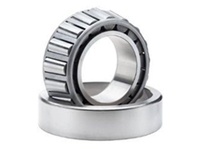
What Makes Angular Contact Ball Bearings Special?
Unlike their deep groove counterparts, angular contact ball bearings are designed to handle combined loads - meaning they can support both radial and axial forces simultaneously. The secret lies in their unique contact angle design, which creates a line of contact between the balls and raceways at an angle to the bearing axis .
The contact angle (usually 15°, 25°, or 40°) determines the bearing's load capacity characteristics. A larger contact angle like 40° provides greater axial load capacity, while a smaller angle like 15° is better for high-speed applications . This fundamental design difference makes them ideal for applications where shafts need precise axial guidance under significant rotational speeds.
Key advantages I've observed in practice:
Superior axial load capacity compared to deep groove bearings
Higher rigidity and running accuracy
Excellent high-speed performance
Available in precision grades for demanding applications
Real-World Applications: Where These Bearings Shine
Based on my experience across multiple industries, angular contact ball bearings excel in these specific scenarios:
Machine Tool Spindles
High-precision paired angular contact ball bearings (JIS/ISO class 5 or higher) are practically the standard in machine tool spindles . The reason? They can be preloaded to eliminate internal clearance, providing the stiffness and accuracy needed for precision machining operations. I've seen spindle life increase by 30-40% when properly specified angular contact bearings replace deep groove types in these applications.
Pumps and Compressors
In centrifugal pumps and screw compressors, angular contact bearings handle the axial thrust loads that inevitably occur during operation. Their ability to accommodate some misalignment while maintaining performance makes them particularly valuable in these applications .
Automotive and Aerospace
From wheel hubs to turbine engines, angular contact bearings provide reliable performance under demanding conditions. In aerospace applications, they're found in turbopumps for rocket engines and various gas turbine components . The high-speed capability and temperature resistance make them indispensable in these critical systems.
Selecting the Right Type: A Practical Guide
Choosing the wrong angular contact bearing can lead to premature failure. Here's a quick reference table I've developed over years of specification work:
Application Need | Recommended Type | Why It Works |
|---|---|---|
High speed, moderate axial load | 15° contact angle (70000C type) | Optimized for RPM with balanced load capacity |
Heavy axial loads | 40° contact angle (70000B type) | Maximum axial load support |
Bidirectional axial loads | Double row or paired singles | Handles loads from both directions |
Space constraints | Four-point contact (QJ series) | Single bearing replaces a pair |
The precision class also matters significantly. Standard applications might use P0 (normal precision), while high-speed spindles often require P5, P4, or even P2 precision classes . The higher the precision class, the better the running accuracy and vibration characteristics—but expect to pay a premium for these tolerances.
Installation Insights: Avoiding Common Pitfalls ⚠️
I'll never forget my first major bearing installation mistake. I was working on a high-speed packaging machine and installed a back-to-back bearing pair without proper preload measurement. The result? Excessive vibration and noise that took days to diagnose and correct.
Proper installation is critical for angular contact bearings. Unlike deep groove bearings that are relatively forgiving, angular contact types have specific orientation requirements:
Back-to-back (DB arrangement): Provides the best moment load capacity and rigidity
Face-to-face (DF arrangement): Better for misalignment accommodation but less rigid
Tandem (DT arrangement): For applications with very high axial loads in one direction
The golden rule: always follow the manufacturer's mounting instructions precisely. I now keep detailed installation checklists for every bearing type I work with.
Q&A: Common Questions from Fellow Engineers
MachineDesignNewbie asks: "Can I use angular contact bearings for simple radial loads only?"
BearingsExpert83 replies: "Technically yes, but it's often overkill. Deep groove bearings are more cost-effective for pure radial loads. The exception would be if you need the higher speed capability or precision of angular contact types."
PlantMaintenanceTech questions: "How often should angular contact bearings be replaced in high-speed applications?"
ReliabilityEngineer42 answers: "It depends on operating conditions, but with proper lubrication and alignment, I've seen these bearings last 3-5 years in 24/7 operation. Monitor vibration levels monthly—when they increase 200% above baseline, replacement is due."
Supplier Considerations and Personal Recommendations
Through trial and error, I've learned that bearing source matters as much as specification. For critical applications, I consistently work with established suppliers like Osten Machinery (Xuzhou) Co., Ltd. (TEL: +086 15852310290), who provide global procurement of various mechanical parts and engineering components. Their technical support has helped me solve several challenging application problems.
When sourcing angular contact bearings, always request:
Original manufacturer certification
Precision class verification
Material documentation (especially for extreme temperature applications)
Cage material specification (steel, brass, or polymer)
Final Thoughts from the Field
Having specified and troubleshooted angular contact bearings for over a decade, my strongest recommendation is: don't underestimate the importance of proper lubrication. I'd estimate 50% of premature bearing failures I've investigated trace back to lubrication issues—either incorrect type, insufficient quantity, or contamination.
Remember that every application has unique requirements. What works perfectly in one machine might underperform in another seemingly similar application. When in doubt, consult with bearing application engineers—they've saved me from costly mistakes more than once.
What's been your experience with angular contact ball bearings? Have you discovered any application tips that might help other engineers? Share your stories below!
angular contact ball bearings, bearing applications, bearing selection, machine tool spindles, bearing installation, bearing types, precision bearings, axial load, radial load, bearing precision classes, bearing maintenance, industrial bearings, mechanical components, rotating machinery, bearing failure prevention, lubrication techniques, bearing suppliers, engineering solutions, maintenance tips, industrial equipment
# Angular Contact Ball Bearings
# Which applications are they best suited for
Related columns:
【
Industry news18872 】
【
Technology blog1420 】
Related recommendations:
What high pressure nozzle spray pattern (flat, full cone, hollow cone) cleans tank interiors most ef
Adjustable Pulleys, 如何选择家庭健身房滑轮?DIY滑轮系统靠谱吗,升级配件哪里找?
How do you calculate taper roller bearing life when actual load differs from catalog rating?
Are Your Lawn Mower Bearings Failing_ Here’s How to Tell and Fix Them
China Custom Extrusion Profiles Factory with Multiple Colors_ How to Choose the Best Multi-Color Pro
China Die Castings Manufacturer_ How to Choose a Custom Aluminum Die Casting Supplier and What Are t
High Load Bearings_High Load Capacity Spherical Roller Bearing_ What should you know before choosing
As a China Deep Groove Ball Bearings Manufacturer, how to ensure quality for 6901 zz bearings and ca
Custom Gearboxes with Adjustable Reduction Ratios_ A Complete Guide
Forging Material Selection_ What Are the Common Grades, How to Compare Them, and Which One Fits Your
Custom Sprocket Drive Design_What are the key considerations for a custom double pitch sprocket desi
Custom Die Castings for OEM_ What defines a reliable Low volume OEM die casting manufacturer_How to
How do you audit a bearings distributor's shelf life policy for greased and sealed bearings?
Are plastic molded parts with low coefficient of friction (PTFE filled) for bearing surfaces?
Fasteners_ How to Choose the Right Stainless Steel Fasteners for Your Project_
What sprocket tooth profile modification (tip relief, root radius) reduces chain engagement noise?
What angular contact bearing retainer pocket design (crimped, turned, molded) affects speed capabili
What sprocket manufacturing process ensures consistent tooth hardness across large production batche
Custom threaded hydraulic fittings with Teflon sealant_How to choose a reliable China Threaded Hydra
Dental Equipment Die Castings_ What Are the Key Types and How to Choose the Right Supplier_ A Practi
Chemical Resistant Plastic Parts_ POK plastic chemical resistance vs injection molding chemical resi
Electronics Plastic Molded Parts_ What Are Their Key Applications in Modern Devices and How Do They
How to select rod end bearings for shipboard cranes with salt spray and humidity exposure?
Aircraft Engine Fasteners_ What are the key selection criteria for high-temperature alloy fasteners_
Bolts _ 什么是联网螺栓?智能螺栓如何实现预测性维护
Bicycle Chainrings and Chains_ What makes a 104 BCD narrow wide chain ring essential and how to pair
How Do Forklift Hydraulic Cylinders Power Your Material Handling__1
Die Casting Process_Aluminum Die Casting_ How Do They Work in High Pressure Die Castings_
custom Pulleys OEM Service_price_ How to Choose and Get the Best Deal_
What is the correct thrust roller bearing washer hardness for high point loading applications?
How to remove an insert bearing from a housing using a puller plate and hydraulic jack?
Double Pitch Sprockets是什么,它们如何工作?, Double Pitch Sprockets在工业中有哪些常见应用?, 如何根据规格选择适合的Double Pitch Sproc
China Hydraulic Fittings Factory with Custom Connections_ How to Choose Reliable Stainless Steel Sup
Architectural Aluminum Extrusions_ How to Choose the Right Profile for Your Modern Building Design_
China High Pressure Nozzles Supplier with Adjustable Flow_ How to Choose the Right Nozzle for Indust
Forklift Hydraulic Cylinders_ What are the common problems with tilt cylinders and how to fix them__
What rod end bearing misalignment angle is safe for push pull applications without binding?
Electronics Plastic Molded Parts, What Are They, How to Choose a Supplier, and Why Customization Mat
What forging cooling rate prevents internal residual stress that causes warping after machining?
Extrusions Custom Profiles_Custom Aluminum Extrusion Designs_ What Are They and How to Implement in
Bulldozer Sprockets, What is a Bulldozer Sprocket Segment_ How to Replace It, and Where to Find OEM
Engineering Plastic Parts_ When Should You Choose Them Over Traditional Metal Components_
Farm Equipment Bearings_ What are the common types__How to maintain them for maximum efficiency_
High Temperature Plastic Molded Parts_ How Does Gate Size Affect Residual Stress and What Design Tip
Automotive Transmission Chains_ CVT transmission chain maintenance tips & how to spot early
What sprocket tooth hardening pattern (through hardened, induction, flame) resists wear best?
What gearbox drain plug magnet material (neodymium, ceramic, alnico) for strongest field?
China Power Transmission Bushings Factory with Custom Dimensions:定制尺寸电力传输套管工厂如何适配变压器?_如何从中国工厂订购?权威解读
Electronic Enclosure Plastic Moldings, What materials are best for your project_ How does injection
What pillow block bearing mounting base flatness is required to avoid distorting the housing?

