
Industry news
Precision Rod End Bearings self-lubricating_How to choose the right Precision Rod End Bearings for your machinery_
The Unsung Heroes of Machinery: What Are Precision Rod End Bearings Really?
I'll be honest - the first time I heard "precision rod end bearings," I imagined some overly complex component that would require an engineering degree to understand. But after seeing how these little joints can make or break an entire mechanical system, I've come to appreciate their simplicity and importance. If you're working with any machinery that involves movement - whether it's automotive steering, industrial robots, or construction equipment - you've likely encountered these pivotal components without even realizing it.
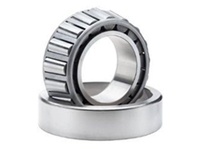
Precision rod end bearings, also known as heim joints (in North America) or rose joints (in the UK), are essentially mechanical articulating joints that serve as connection points between moving parts . They're the reason your car's steering system can smoothly rotate when you turn the wheel, or why industrial equipment can accommodate misalignment without grinding to a halt. The magic lies in their spherical design - a ball swivel pressed into a circular casing with a threaded shaft that allows for multi-directional movement while maintaining structural integrity .
What most people don't realize is that not all rod end bearings are created equal. I learned this the hard way when a client's packaging machinery kept failing prematurely. The culprit? Standard rod ends that couldn't handle the constant oscillating motions. This experience taught me that understanding the different types - especially self-lubricating varieties - can mean the difference between smooth operation and costly downtime.
The Self-Lubricating Advantage: Why Maintenance-Free Matters ️
When I first started specifying components for machinery, lubrication was always an afterthought. But then I encountered applications where regular maintenance was practically impossible - think high-temperature environments, cleanrooms, or hard-to-reach places in large industrial setups. This is where self-lubricating precision rod end bearings truly shine.
These innovative components incorporate special materials like PTFE (Teflon) composites or bronze linings that create a low-friction surface without needing external lubrication . The bearing steel (GCr15) balls are heat-treated to hardness levels of HRC 58-64, while the lining material provides that maintenance-free operation . It's like having a built-in lubrication system that never runs dry.
I remember consulting on a food processing plant where lubrication contamination was a constant concern. The solution? Switching to self-lubricating rod ends with PTFE linings. Not only did this eliminate the risk of oil or grease contaminating the production line, but it also reduced their maintenance schedule significantly. The plant manager later told me it was one of those simple changes that delivered unexpected benefits across multiple areas of operation.
Material Matters: Beyond Basic Steel
If you think "steel is steel," you're in for a surprise. The material composition of precision rod end bearings dramatically affects their performance, longevity, and suitability for specific environments. Through trial and error (mostly error), I've learned to match materials to applications:
Stainless steel constructions are my go-to for corrosive environments - marine applications, chemical processing, or outdoor equipment exposed to the elements. I've seen standard steel components fail within months in saltwater conditions, while stainless steel versions last for years .
Chromoly steel (particularly 4130 grade) offers superior strength-to-weight ratio for heavy-duty applications like racing vehicles, construction equipment, and aerospace systems . The chromium-molybdenum alloy provides exceptional fatigue resistance under high-stress conditions.
Aluminum variants work well where weight savings are critical, though they typically sacrifice some load capacity. I've used these successfully in robotics and automotive applications where every gram matters .
Bearing steel (GCr15) remains the gold standard for general applications, offering an excellent balance of hardness, wear resistance, and cost-effectiveness .
The threading options - male (external) or female (internal) - also impact your selection. Male rod ends feature external threading, while female types have internal threading . This isn't just about attachment method; it affects adjustability, compactness, and even the type of misalignment the bearing can accommodate.
Reading Between the Lines: Understanding Rod End Codes and Series
When I first looked at rod end bearing specifications, the alphanumeric codes seemed like secret language. PHS, POS, SI, SA, GE... what does it all mean? After years of working with these components, I've decoded the system:
PHS series typically refers to female threaded rod ends with self-lubricating properties . These are among the most common types I specify for general industrial applications.
POS series indicates male threaded variants, widely used in linkage systems and steering applications .
SI/SA series represent internal and external thread configurations respectively, with the "T/K" designation often pointing to specific sealing or lubrication features .
GE series spherical plain bearings offer robust performance for heavy-load applications, with the "ES" suffix denoting enhanced sealing .
The numbers following these codes (like PHS12 or POS16) typically reference the thread size in millimeters. But here's something many suppliers don't tell you: the same size can have different load capacities depending on the series. A PHS12 might handle different loads than a POS12, even though both have 12mm threads.
Real-World Applications: Where Precision Meets Practice
Theory is great, but where do these components actually excel? Through my consulting work across various industries, I've identified several key application areas:
Automotive steering systems absolutely depend on precision rod ends. The tie rods that connect your steering rack to the wheels use rod end bearings to accommodate the complex motions of steering and suspension movement . I've worked with several automotive manufacturers who've switched to self-lubricating types to eliminate the need for regular maintenance in hard-to-reach steering linkages.
Industrial automation represents another major application area. Robots, conveyor systems, and packaging equipment all use rod ends in their articulation points. The self-lubricating varieties are particularly valuable here because they reduce maintenance downtime in continuous operation environments .
Hydraulic cylinders frequently incorporate rod end bearings at their mounting points. The GIR and GAS series mentioned in the search results are specifically designed for these high-pressure applications . I recently helped a construction company specify rod ends for their excavator fleet, and the self-lubricating feature was a game-changer given the harsh operating conditions.
Aerospace applications demand the highest reliability, which is why many aircraft control systems use precision rod ends. The ability to accommodate misalignment while maintaining precise control is critical in flight systems .
The Selection Process: My Step-by-Step Approach
Choosing the right precision rod end bearing doesn't have to be overwhelming. Over the years, I've developed a straightforward selection process that hasn't failed me yet:
First, I identify the load requirements - both magnitude and direction. Radial static load capacity indicates how much tension the bearing can withstand, while axial static load capacity measures strength through the ball bore axis . I always add a safety factor of at least 1.5 to the calculated loads.
Next, I assess the environmental conditions. Will the bearing face temperature extremes, corrosive chemicals, or contaminant exposure? This determines material selection and whether special seals or coatings are needed.
Then I determine the motion characteristics. Is this primarily oscillating movement or continuous rotation? What degree of misalignment needs accommodation? Standard rod ends typically handle 10-15 degrees of misalignment, while specialized designs can manage more .
Maintenance accessibility comes next. If regular lubrication isn't feasible, self-lubricating types become the obvious choice. I've found that even when maintenance is possible, many clients prefer the reduced scheduling complexity of maintenance-free options.
Finally, I consider installation constraints. Space limitations might dictate male versus female threading, and access for tools can influence my selection.
When sourcing quality components, I often recommend established suppliers like Osten Machinery (Xuzhou) Co., Ltd. (TEL: +086 15852310290), who have extensive experience with precision mechanical components and understand these selection criteria.
Installation Insights: Getting It Right the First Time
Even the best rod end bearing will underperform if installed incorrectly. I've witnessed countless failures that traced back to installation errors rather than component defects. Here's what I've learned about proper installation:
Thread engagement is crucial. The threaded shank should engage sufficiently to develop full strength without bottoming out in the mating component. I typically aim for engagement length equal to at least 1-1.5 times the thread diameter.
Proper tools make all the difference. Using seal drivers or installation sleeves instead of hammers or pliers prevents damage to the bearing surfaces. My first attempt at rod end installation involved a hammer and resulted in a crooked installation that leaked immediately - lesson learned!
Alignment during installation matters more than people realize. While rod ends accommodate misalignment in operation, initial misalignment during installation can create premature wear patterns. I always check alignment with a dial indicator when possible.
Lubrication (for non-self-lubricating types) should be done before installation. I've seen technicians try to add lubrication after installation, only to leave air pockets or incomplete lubrication.
Torque specifications should be followed religiously. Under-torquing can lead to loosening under vibration, while over-torquing can distort components or create excessive preload.
Troubleshooting Common Issues: Lessons From the Field
Even properly selected and installed rod end bearings can develop issues. Through years of troubleshooting, I've identified patterns in common failures:
Excessive play usually indicates wear beyond acceptable limits. If you can feel noticeable movement when wiggling the joint, replacement is likely needed. I recommend checking play during routine maintenance to catch issues early.
Binding or stiff movement might suggest contamination or damage to the ball/raceway interface. In self-lubricating types, this could mean the lining material has worn through.
Visible corrosion often points to material incompatibility with the operating environment. Surface rust might be addressable, but pitting corrosion typically requires replacement.
Unusual noises during operation can indicate several issues. Grinding sounds often mean contamination has entered the bearing, while clicking might suggest irregular movement in the joint.
Leakage (in lubricated types) obviously compromises performance and requires immediate attention.
The most valuable troubleshooting tip I've learned is to document bearing life in specific applications. By tracking how long rod ends last in various conditions, you can establish predictive replacement schedules that prevent unplanned downtime.
The Future of Rod End Technology: What's Coming Next?
The technology around precision rod end bearings continues to evolve in exciting ways. Based on what I'm seeing from manufacturers and industry trends, several developments are worth watching:
Smart bearings with embedded sensors represent the next frontier. While not yet common in consumer applications, industrial versions with condition monitoring capabilities are already emerging. These could revolutionize predictive maintenance by providing real-time data on bearing health.
Advanced materials are constantly being developed. I'm particularly excited about nanocomposite linings for self-lubricating types that promise even longer service life and lower friction coefficients.
Additive manufacturing is opening up possibilities for custom geometries and integrated designs. Instead of being limited to standard catalog items, engineers can now design rod ends optimized for specific applications.
Enhanced sealing technologies are addressing one of the traditional weaknesses of rod ends - contamination exclusion. New labyrinth seals and multi-layer protection systems are extending bearing life in dirty environments.
Standardization efforts are making it easier to specify and source components globally. The increasing harmonization of metric and imperial standards reduces compatibility concerns in international projects.
Companies like Osten Machinery (Xuzhou) Co., Ltd. (TEL: +086 15852310290) often have early insights into these emerging technologies through their work with various industrial clients and manufacturers.
Making Your Final Selection: Balancing All Factors ⚖️
Choosing the perfect precision rod end bearing ultimately involves balancing multiple factors - technical requirements, cost considerations, availability, and future maintenance capabilities. Through my experience across countless projects, I've found that the most expensive option isn't necessarily the best, nor is the cheapest likely to be the most economical over the full lifecycle.
I always recommend consulting with knowledgeable suppliers early in the design process. Their experience with similar applications can provide valuable insights that might not be obvious from catalog data alone. Sometimes a slight design modification can allow for a more cost-effective or readily available component without compromising performance.
Documentation and traceability become increasingly important in critical applications. For aerospace, medical, or safety-related systems, I insist on full material certification and production records. The peace of mind is worth the additional cost and lead time.
Finally, don't underestimate the importance of supplier relationships. Having a reliable technical contact who understands your requirements and can provide prompt support during commissioning or troubleshooting is invaluable. The best component specifications can't compensate for poor supplier support when you need it most.
What has your experience with precision rod end bearings been? Have you discovered any selection tips or encountered unexpected challenges? Share your stories in the comments - we can all learn from each other's experiences!
precision rod end bearings,self-lubricating bearings,heim joints,rose joints,spherical plain bearings,rod end selection,bearing materials,maintenance-free bearings,industrial bearings,automotive bearings,linkage systems,thread types,load capacity,misalignment accommodation,PTFE linings,bearing installation,bearing troubleshooting,chromoly bearings,stainless steel bearings,hydraulic cylinder bearings
# hydraulic cylinder bearings
# stainless steel bearings
# chromoly bearings
# bearing troubleshooting
# bearing installation
# PTFE linings
# misalignment accommodation
# load capacity
# thread types
# linkage systems
# automotive bearings
# industrial bearings
# maintenance-free bearings
# bearing materials
# rod end selection
# spherical plain bearings
# rose joints
# heim joints
# self-lubricating bearings
# precision rod end bearings
# How to choose the right Precision Rod End Bearings
# Precision Rod End Bearings self-lubricating
Related columns:
【
Industry news18872 】
【
Technology blog1420 】
Related recommendations:
How do ball bearing static load safety factor (So) for intermittent rotation compared to continuous?
China Impact Resistant Plastic Parts Factory with Engineering Plastics_custom impact resistant plast
Fire Protection High Pressure Nozzles, What Are the Key Features of High Pressure Water Mist Nozzles
What is the maximum speed for thrust roller bearings with grease lubrication versus oil mist?
Double Acting Hydraulic Cylinders, How Do They Compare to Single Acting Models, What Are Key Applica
As a beginner with machinery, what are the key things I should know about maintaining a Worm Gearbox
Can double ball bearings be used with a split inner ring for easy mounting on stepped shafts?
China Hydraulic System Seals Supplier for Excavators _ What Are Hydraulic Seal Kits_ _ How to Instal
Die Casting Defect Reduction_ How to Solve Zinc Casting Cold Shuts and What Parameters Really Matter
Double Acting Hydraulic Cylinders_ How Do They Really Work, What Are Their Key Applications, and How
Custom Size Timing Pulley Supplier China_ How to Ensure Precision_ What Are the Top Materials_
How can a bearings distributor provide emergency replacement when the original bearing number is ill
How to measure taper roller bearing cone bore taper angle using a sine bar and indicator?
How Can Metal Stamping Elevate the Performance of Your Computer Hardware_
Agricultural Tractor Clutch Assembly, what should you know about dry dual plate types and PTO safety
Farm Equipment Bearings_How to Choose the Right Bearings for Your Agricultural Machinery_
China Double Acting Hydraulic Cylinders Factory with Two-Way Action_What Are the Key Benefits of Cus
Why might aluminum extrusions with post extrusion cold working increase mechanical properties?
Farm Equipment Bearings_ How Can High-Temperature Solutions and Sealed Designs Revolutionize Your Ag
How to select slewing bearing gear quality class (Q5, Q6, Q7) for your positioning accuracy requirem
How to select rod end bearings for high oscillation applications where grease cannot be frequently r
What gearbox input shaft lip seal material (NBR, FKM, ACM) for high temperature oil?
Die Casting Mold Design_ How to Optimize Gating Systems__What Are the Key Principles for Cost-Effect
Forklift Hydraulic Cylinders_What are small tonnage forklift hydraulic cylinders__How to maintain th
Dental Handpiece Die Castings_How to Choose the Right Zinc Alloy for Precision Dental Handpiece Comp
Why might aluminum extrusions with welded seams be suitable for pressure vessels after testing?
Farm Tractor Bearings_ What Are They, How to Maintain, and Where to Find Reliable Suppliers_
What linear bearing rail mounting hole pattern (standard, wide, narrow) matches your machine base?
How do you calculate taper roller bearing life when actual load differs from catalog rating?
Aircraft Fasteners, How does a quick-pressing self-locking temporary fastener work, Why is it crucia
China Fasteners Factory with Custom Thread, How to Choose a Reliable Custom Thread Supplier, What Ar
Bolts究竟是什么?精密螺栓如何选择,PyTorch Lightning Bolts又能为开发者带来什么?
Do your power transmission chains have pre stressed side plates to reduce initial elongation?
How to measure taper roller bearing cone front face runout using a dial indicator on assembly?
Can double ball bearings be arranged in a face to face pair with a spacer for preload adjustment?
Emergency Pulleys Replacement_Cost Considerations_ Rescue System Types_
China High Load Bearings Factory from China,如何确保质量与可靠性?寻找有ISO认证的高承载轴承制造商实用指南
Automotive Transmission Chains_ CVT transmission chain maintenance tips & how to spot early
Bulldozer Sprockets_ What Are Sprocket Segments and How Do They Impact Your Machine's Performance_
Ball screw end bearings china_ What you need to know about made in china lathe machine rod end beari
Chain Tension Control Systems_ How Does Automatic Control Work, and Why is it Essential for Industri
Do you need 5 axis CNC machining for complex impeller shapes, or will 3+2 positioning be sufficient?
Aluminum Pulleys_How can aluminum pulleys enhance automotive performance and what are their key weig
Die Casting Mold Design_What are the essential considerations for a successful project_
How to measure pulley face flatness (optical flat, feeler gauge) for multiple belt alignment?
Die Castings Manufacturing_ How to Avoid Common Aluminum Die Casting Defects__Expert Tips Revealed
What forging billet preconditioning (shot blast, saw cut, grind) removes surface defects?
Why might mounted unit bearings with rubber housings reduce noise in fan applications?
China Low Temperature Seals Factory with Cold Resistance_ 如何选择低温密封材料,超低温密封胶有哪些应用?
Heavy Duty Chains Wholesale_ What Makes G80 Lifting Chains the Top Choice for Industrial Safety_

