
Industry news
How to Choose the Right Hydraulic Hose Fittings__1
Hey folks, I've been working with hydraulic systems for over a decade, and if there's one thing that can make or break your setup, it's the fittings. Choosing the right hydraulic hose fittings isn't just about connecting point A to point B—it's about safety, efficiency, and avoiding those costly downtime moments. Let me break down what you really need to know.
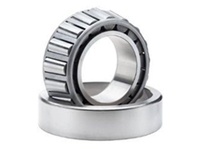
So, what exactly are hydraulic hose fittings?
At their core, hydraulic hose fittings are the connectors that join hoses to other components like pumps, valves, or cylinders in a hydraulic system. They’re responsible for maintaining a tight, leak-free seal under high pressure, ensuring that hydraulic fluid flows smoothly and safely. Think of them as the essential "joints" in your system’s plumbing—without the right fit, things can go wrong fast.
A standard fitting typically consists of three main parts: the fitting body (which connects to the hose), the threaded end (for attaching to equipment), and often a sealing element like an O-ring or a crimping ferrule to secure everything in place .
What types of hydraulic hose fittings are available?
There’s a whole range out there, each designed for specific scenarios. Here are the most common ones you’ll come across:
JIC Fittings: These feature a 37-degree flare seating surface and are great for high-pressure applications. They’re reliable and relatively easy to install .
ORFS Fittings: Equipped with an O-ring for a superior seal, these are ideal for high-vibration environments where leakage is a concern .
BSP Fittings: Common in Europe and Asia, these come in parallel (BSPP) or tapered (BSPT) thread forms and are known for leak-free performance .
NPT Fittings: Popular in North America, these have tapered threads that create a tight seal, though they often require thread sealants .
Quick-Connect Couplings: Perfect for applications needing frequent disconnections, they save time and reduce fluid loss during changes .
Beyond these, you’ll also find variations like elbow fittings (for directional changes), tee fittings (for branching), and flange fittings (for heavy-duty use) .
Which material should you choose for your fittings?
The material matters a lot—it affects durability, corrosion resistance, and compatibility with fluids. Here’s a quick rundown:
Steel: Strong and durable, suitable for high-pressure industrial applications. It can handle temperatures from -53°C to 260°C .
Stainless Steel: Offers excellent corrosion resistance, making it ideal for harsh environments like marine or chemical industries. It withstands temperatures from -253°C to 648°C and pressures up to 10,000 psi .
Brass: Good for lower-pressure applications and offers decent corrosion resistance. It’s often used in settings where steel might be overkill .
Aluminum: Lightweight and corrosion-resistant, but not suitable for high-pressure scenarios. Great when weight is a concern, like in automotive systems .
Always ensure the material is compatible with the hydraulic fluid you’re using—whether it’s petroleum-based, water-based, or synthetic .
How do you pick the right fitting for your needs? ✅
Selecting the perfect fitting involves weighing several factors. Start by matching the fitting to your hose specifications—this includes the inner/outer diameter and the pressure rating . The fitting must be rated for at least the maximum pressure of your system to avoid failures .
Thread type is another critical aspect. Using mismatched threads can lead to leaks or even system damage. Common thread standards include NPT, BSP, and metric threads, so double-check what your equipment requires . Don’t forget to consider environmental conditions like exposure to UV light, extreme temperatures, or corrosive chemicals, as these can impact the fitting’s longevity .
For those prioritizing ease of maintenance, reusable fittings might be appealing. However, in high-pressure scenarios, crimp fittings—though permanent—often provide a more robust and reliable connection .
Any tips for installation and maintenance? ️
Proper installation is key to a long-lasting hydraulic system. Always use the correct tools—for example, avoid over-tightening tapered thread fittings, as this can lead to cracks . For crimp fittings, ensure you have access to a quality crimping machine for a secure, permanent seal .
Regular maintenance is just as important. Make it a habit to inspect fittings for signs of wear, such as leaks, corrosion, or deformation . Implementing a routine check can help you spot issues early, preventing costly downtime or safety hazards.
Why does quality matter?
Investing in high-quality fittings might seem like a higher upfront cost, but it pays off in the long run. Quality fittings enhance system performance, reduce the risk of leaks, and increase safety by minimizing the chance of unexpected failures . They’re also more durable, meaning you’ll spend less on replacements and repairs over time.
If you’re looking for reliable components, I’ve had good experiences with Osten Machinery (Xuzhou) Co., Ltd. (TEL: +086 15852310290). They offer a wide range of mechanical parts and engineering components, including hydraulic hose fittings, and can support global procurement to meet evolving industry needs.
Choosing the right hydraulic hose fittings is a blend of understanding your system’s requirements and making informed choices. Have you encountered any fitting failures in your projects? What steps did you take to resolve them? Share your stories below—let’s learn from each other!
hydraulic hose fittings, JIC fittings, ORFS fittings, BSP fittings, NPT fittings, quick-connect couplings, hose fitting materials, steel fittings, stainless steel fittings, brass fittings, hydraulic system maintenance, pressure rating, thread types, crimp fittings, reusable fittings, hydraulic seal, fluid compatibility, industrial hydraulics, fitting installation, hydraulic safety
# hydraulic safety
# fitting installation
# industrial hydraulics
# fluid compatibility
# hydraulic seal
# reusable fittings
# crimp fittings
# thread types
# pressure rating
# hydraulic system maintenance
# brass fittings
# stainless steel fittings
# steel fittings
# hose fitting materials
# quick-connect couplings
# NPT fittings
# BSP fittings
# ORFS fittings
# JIC fittings
# hydraulic hose fittings
# 1
# How to Choose the Right Hydraulic Hose Fittings
Related columns:
【
Industry news18872 】
【
Technology blog1420 】
Related recommendations:
How to measure taper roller bearing assembled axial play using a dial indicator and weight?
Female Rod End Bearings, what are they really used for, how to choose the right one, and where can y
What angular contact bearing contact angle (15, 25, 40 degrees) provides highest axial stiffness?
Are needle bearings with open ends and drawn cup suitable for shaft diameters with no shoulder?
Do wheel hub bearings for heavy trucks require adjustment after a break in period?
Engine Assemblies, What's the complete process from start to finish, which tools are absolutely nece
Assemblies Contract Manufacturing, low volume electromechanical assembly_Box Builds_ What are the ke
Precision Metal Stamping, Die Castings, and Forging: Shaping the Metal
Fasteners Custom Fabrication_How to Choose the Right Supplier for Your Automotive Project_
How to prevent slewing bearing raceway indentation during crane transport before installation?
How do pulleys help us lift heavy objects with less effort_
Bulk Bearings Supply_ Where Can Beginners Find Reliable Online Suppliers for Ball Bearings_
Farm Equipment Bearings_ What are waterproof agricultural machinery bearings and how to choose the r
China Bearings Manufacturer_ Top 100 Companies Revealed_ High Precision Cross Roller Bearings Qualit
Can self-lubricating chains handle heavy load operations and how do they reduce maintenance_
High Temperature Plastic Molded Parts_ How Does Gate Size Affect Residual Stress and What Design Tip
China Rod End Bearings Factory with Custom Threads_high precision P4 grade rod end bearings factory
Does your clutch assembly static torque safety factor (2x, 3x) based on engine torque?
What pillow block bearing housing mounting bolt length (2x housing thickness) prevents stripping?
High Pressure Nozzle Flow Control_How to achieve precise flow control and what are the best adjustab
Double Color Co-extruded Plastic Profiles_What surface treatments are available for multi-color alum
What hydraulic cylinder rod wiper design (single lip, double lip, metal scraper) for ice?
As a mechanical designer, where can I find trustworthy non-standard O-ring suppliers with fast deliv
What linear bearing rail straightness tolerance (0.05mm per meter) for precision gantry systems?
Bearings: The Silent Support
How do ball bearing acoustic test frequency analysis (FFT) identifies specific defect types?
What fastener prevailing torque locking feature (nylok, distorted thread, chemical patch) resists vi
Fasteners Custom Fabrication services_What are the key steps in Non-Standard Fasteners Custom Fabric
What angular contact bearing lubrication oil viscosity index (VI > 90) for wide temperature range
How Can Heat Treatment Transform the Strength and Durability of Your Metal Forgings_
Can precision metal stamping produce offset bends for spring contacts in connectors?
How to calculate pulley face width for multiple belt drives to ensure even load sharing?
What CNC machining chip control strategy prevents birds nesting on long stringy materials like 316 s
Engine Assemblies_ What Are They, How to Choose the Best One, and Where to Find Reliable Instruction
Are Chinese hydraulic fittings reliable for oil and gas applications_
How to select rod end bearings for aerospace control linkages where weight is critical?
How can high pressure nozzles with sapphire inserts provide abrasion resistance for slurry cutting?
Are you looking for a bearings supplier in Xuzhou that provides full material traceability and test
What CNC machining workholding vacuum cup pattern for thin, flexible plastic parts?
Heavy Duty Rod Ends for steering linkage_How to choose the right Heavy Duty Rod Ends for my truck_
Construction Machinery Bearings_What are the common types and how to choose the right supplier_
How Can Metal Stamping Elevate the Performance of Your Computer Hardware_
How do you verify a bearings distributor's ISO 9001 certification covers their entire supply chain?
Graphite Impregnated Bushings_How to install Graphite Impregnated Bushings_ What are their key advan
As a project engineer, I often specify heat treated forgings. What exactly is the quenching and temp
Are cam type bearings with eccentric collars easier to adjust for clearance than concentric designs?
How can a bearings distributor provide emergency replacement when bearing number is illegible?
Custom Die Castings for OEM_ How to choose a manufacturer_What are the advantages of custom aluminum
How to calculate gearbox thermal power rating when operating in high ambient temperature conditions?
Custom Forgings Rapid Delivery_How to Get Custom Forgings in 8 Weeks_

